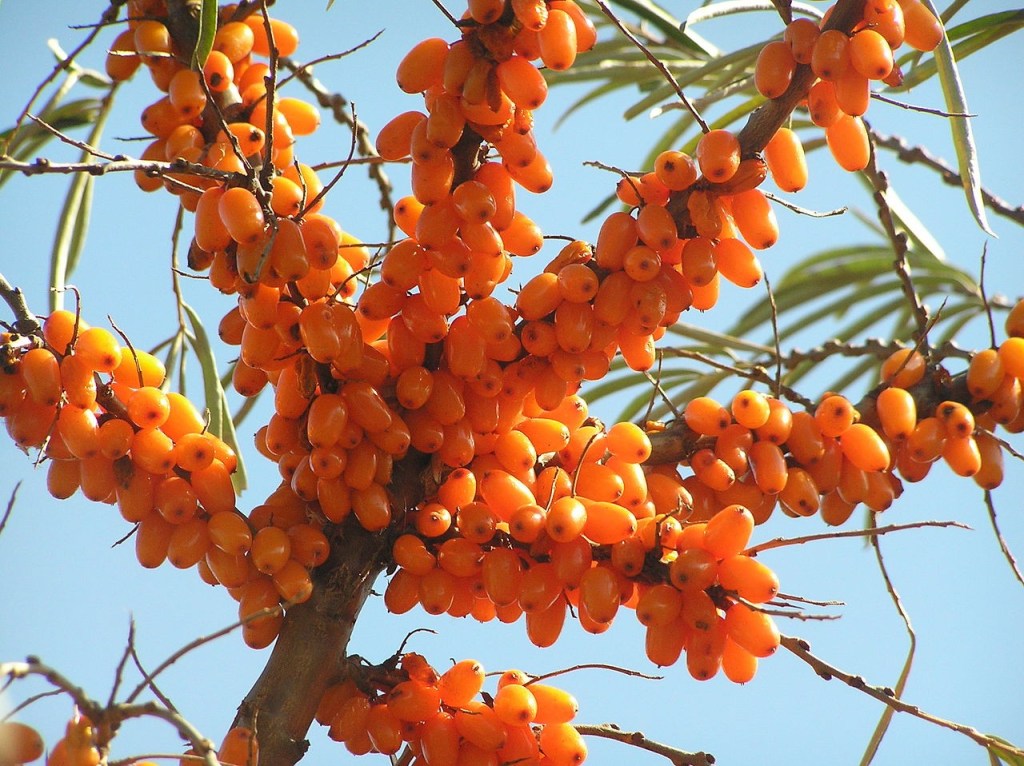
Sea buckthorn (Hippophae rhamnoides) is a plant found throughout Europe and Asia and displays as a spiny, thicket-forming shrub, often found in sand dunes along the coast of England. It is most obvious in autumn, when it is full of bright orange berries.
Sea buckthorn berries are a source of omega-7 fatty acids and an array of vitamins, including beta-carotene, vitamin C and E. Omega-7 helps body cells retain moisture in the mucous membranes. They are also a great support to the immune system and overall wellbeing.
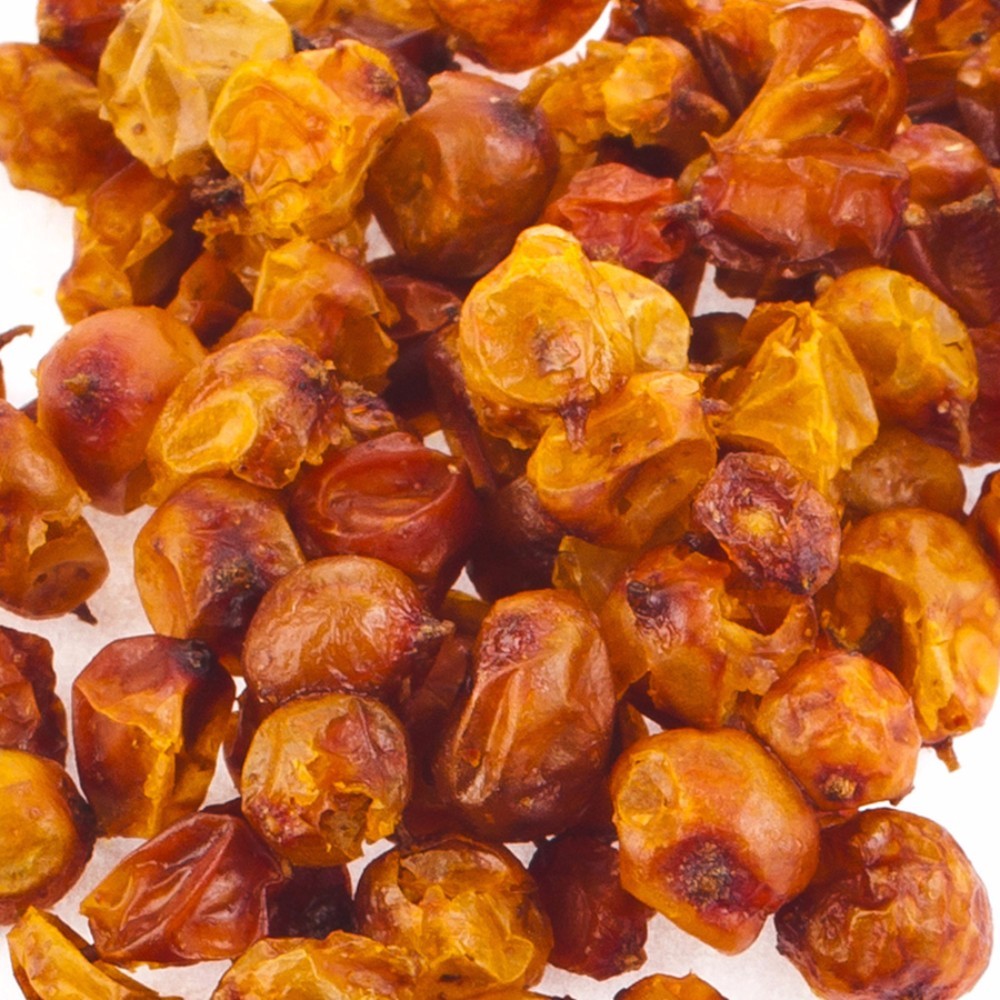
They can also be dried very well to store for future use (I use them dried).
Here’s how to make a sea buckthorn infusion using these steps:
1. Boil 950ml water. It should be very hot, not just warm. 2. Take 12 heaped table spoons of buckthorn berries. 3. Cover with top and leave to brew for 20 minutes. 4. When time is up, add 3-6 table spoons of honey. The quantity of honey you’ll need depends on how sweet the honey is. You may want to put try 3 tbps first, see if the taste is to your liking and, if it’s not sweet enough, add more honey. 5. Strain and enjoy.
I am suffering with a nasty chest infection, my second in 12 months, and I’m feeling really ill with it. I’ve been to the doctors and have been prescribed antibiotics, steroids and an inhaler, but I want to boost my immune system as much as I can at home too.
Therefore I’ve developed this tea today and am brewing up a large batch (enough for about 4 cups worth) to last me throughout the rest of the day and evening.
**Disclaimer: Any medicinal benefits given here are a product of my own research and as such should not be taken over the advice of trained medical professionals. If you are ill, please go and see a doctor. Always make sure that anything you consume is 100% safe. If you are pregnant, consult your doctor or midwife before consuming something you haven’t tried before.**
INGREDIENTS
Fresh peppermint (a few sprigs roughly chopped) – The antioxidants found in mint can fight inflammation in your body and also include compounds, such as terpinene, quercetin, and tocopherols, which have immune-boosting and neuroprotective (the ability for a therapy to prevent neuronal cell death by intervening in and inhibiting the pathogenetic cascade that results in cell dysfunction and eventual death) effects.
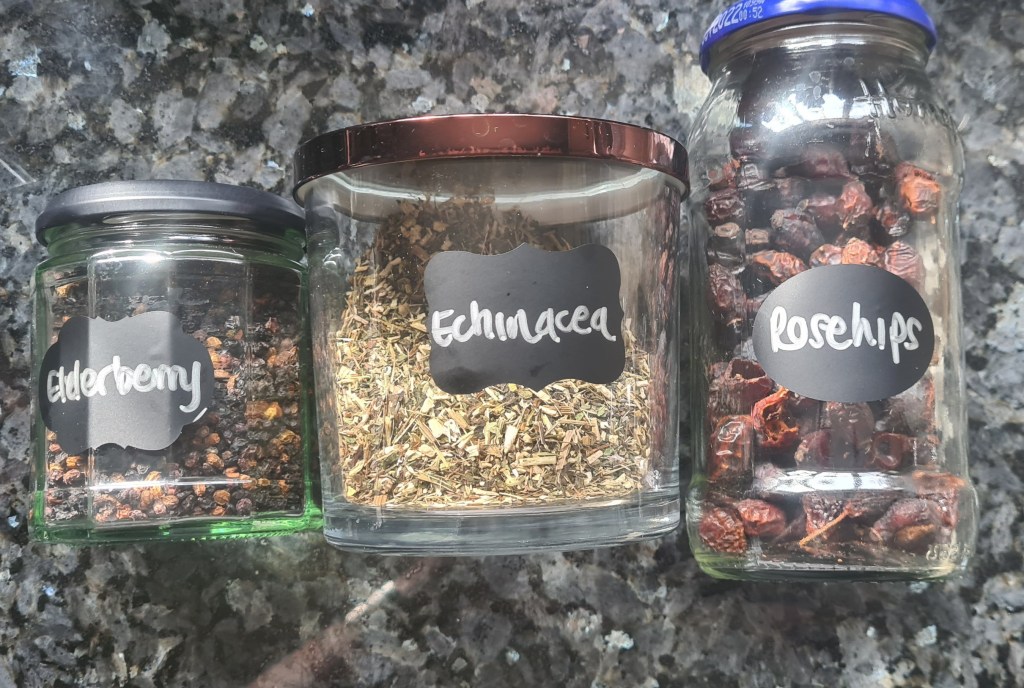
Dried elderberries (heaped tablespoon) – The berries (and flowers) of elderberry are packed with antioxidants and vitamins that may boost your immune system. They could also help tame inflammation, lessen stress and help protect your heart, too. Some experts also recommend elderberry to help prevent and ease cold and flu symptoms.
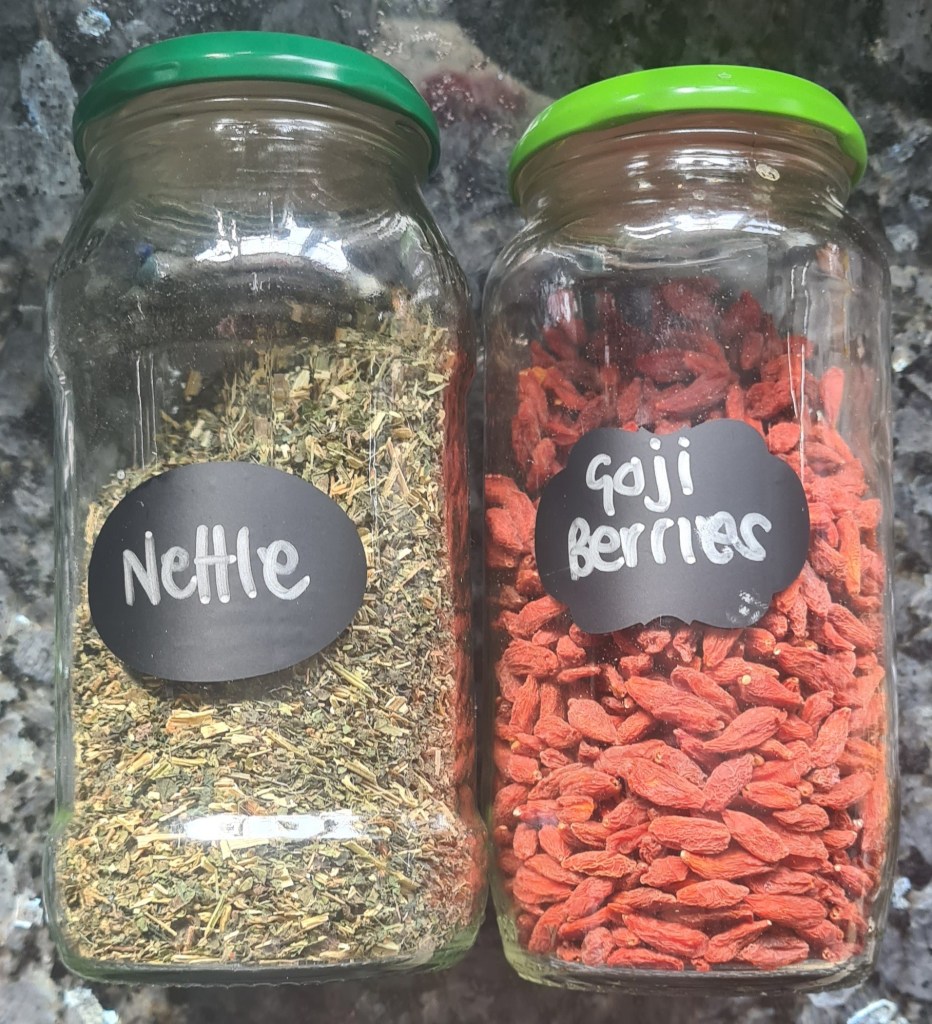
Dried goji berries (heaped tablespoon) – These cheerful red berries contain a number of healthy antioxidants which are known for their immune-boosting qualities and their ability to fight harmful free radicals and inflammation. They also contain large amounts of vitamins A and C, similar to other berries.
Dried echinacea (tablespoon) – Studies suggest that echinacea contains active substances that boost immune function, relieve pain, reduce inflammation and have antiviral and antioxidant effects.
Dried nettle (tablespoon) – The nettle plant contains several immune-boosting compounds, including flavonoids, carotenoids and vitamins A and C. These antioxidants help protect immune cells against damage that can weaken immune function. Research also shows nettle extract strengthens the immune response, encouraging immune cell activity.
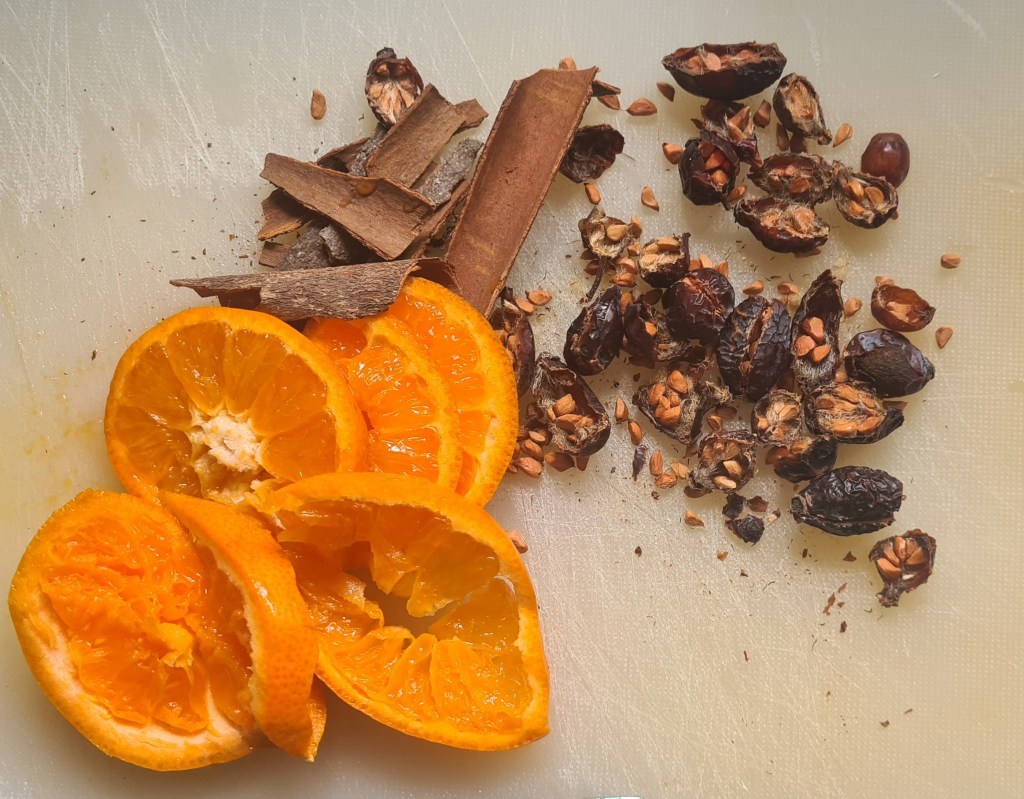
Dried rosehips (about 15 halved) – Due to its high levels of antioxidants, rosehip tea may also help to boost your immune system. Please be careful with the seeds, they’re hard as diamonds!!
Cinnamon bark (a couple of pieces broken up) – Studies show that this spice and its antioxidants have potent anti-inflammatory properties and helps your body fight infections and repair tissue damage.
Sliced whole tangerine – The Vitamin C found in tangerines (and other citrus fruits) is a powerful antioxidant. Additionally, tangerines provide potassium and B complex vitamins, namely B1, B6, and B9, or thiamine, pyridoxine, and folate, respectively.
METHOD
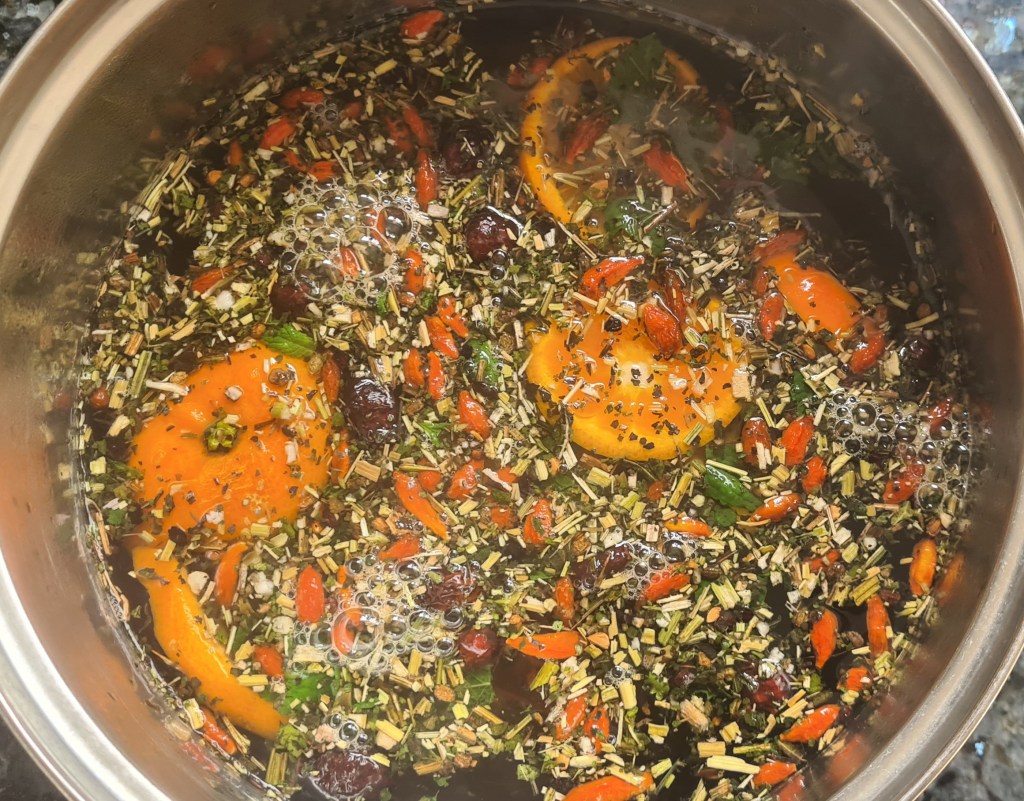
Put all the ingredients into a pan, cover with about 5 cups of boiling water and gently simmer for ten minutes. Strain through a sieve and/or a clean towel/muslin and decant to a cup. Sweeten to taste with honey, brown sugar, agave syrup or your sweetener of choice. Drink and enjoy.
I don’t have much luck with outside plants, due to the crap British weather and the local wildlife that gets into our garden. Therefore, I’ve decided that this year I’ll grow lots of things in the conservatory on the back of the house (which is where our dogs Wade and Wilson and have their beds and bowls, as they sleep there at night and eat their meals in there too).
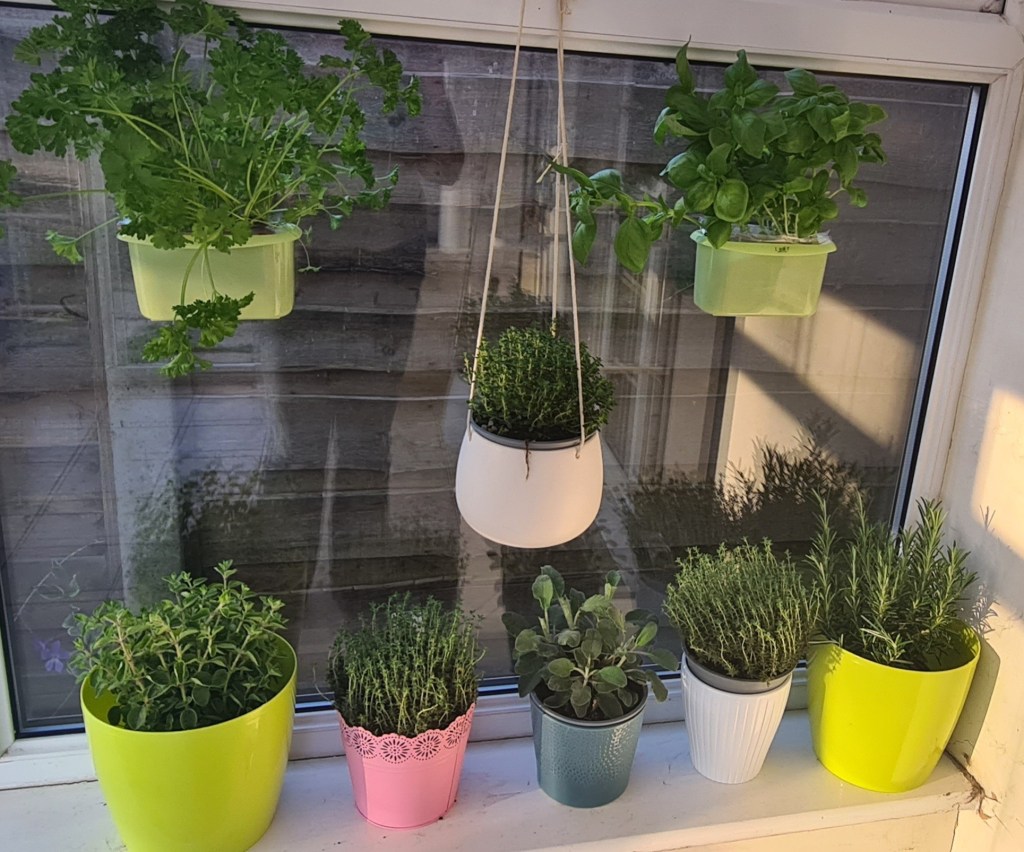
I found some great potted herbs at Costco and some others in Aldi, so here I have three types of thyme, flat leaved parsley, basil, rosemary, sage and oregano.
Today I’ve planted up into compost slices of cherry tomatoes (as the seeds in the tomatoes will germinate once the slice rots down) and some nasturtiums (trailing orange flowers who’s flowers and leaves you can eat). Nasturtiums are also great companion plants (which is the planting of different crops in proximity for any of a number of different reasons, including pest control, pollination, providing habitat for beneficial insects etc) for tomatoes.
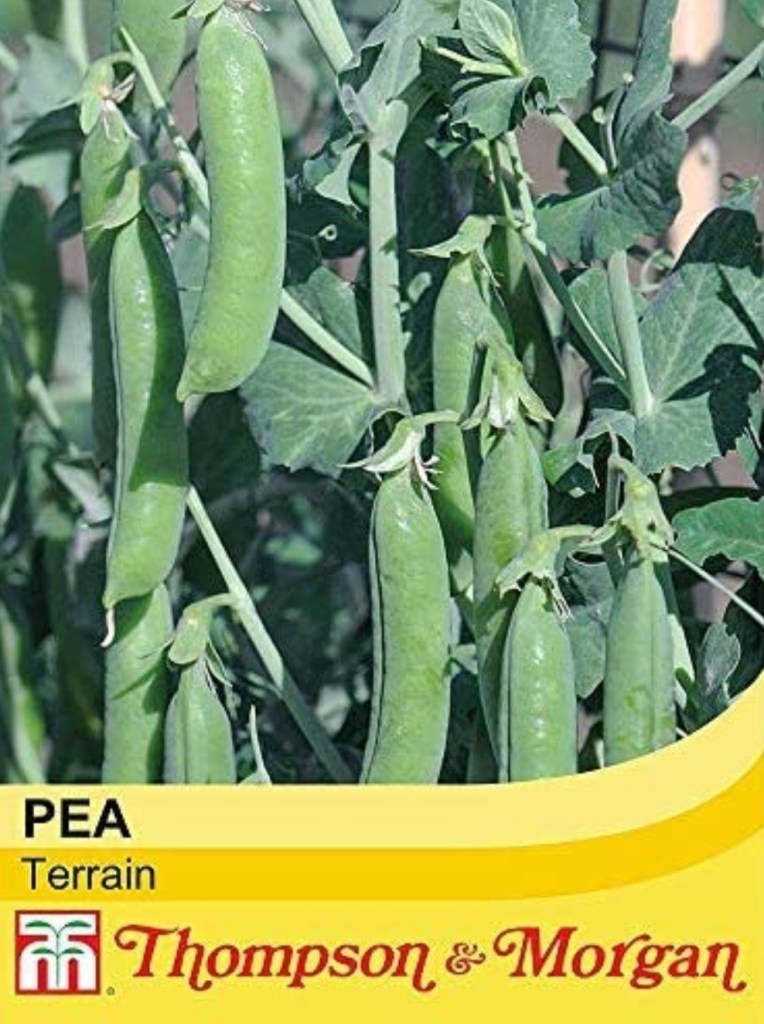
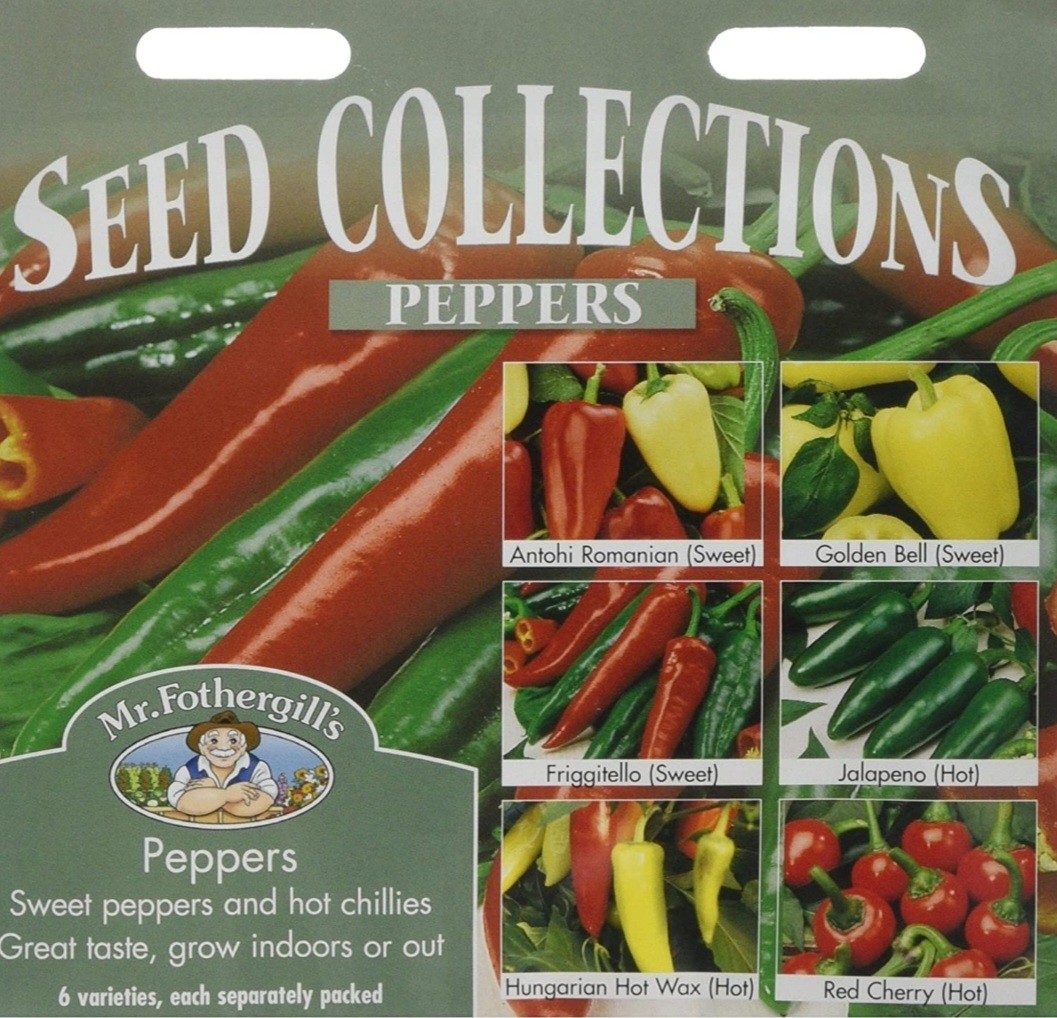
I’ve also bought the following seeds from Amazon, so I can plant up peppers (Capsicum), chilies, peas, purple basil, coriander, marjoram, dill, chamomile, cress, lemon balm and chives.
All these plants and herbs will be invaluable to me as a Green (and Kitchen) Witch and I can’t wait to tend to and care for them when they start growing!
I’ve not been sleeping properly, due to one of my chronic conditions flaring, causing me pain and discomfort. However, we have appointments this weekend and plans to go out for the day tomorrow, so I needed a bit of an energy boost!
I had a look what I’ve got in my mini apothecary for energy and revitalisation and decided to make a tea, which can either be drunk hot, or iced, and sweetened with honey (or agave syrup for our vegan friends).
INGREDIENTS
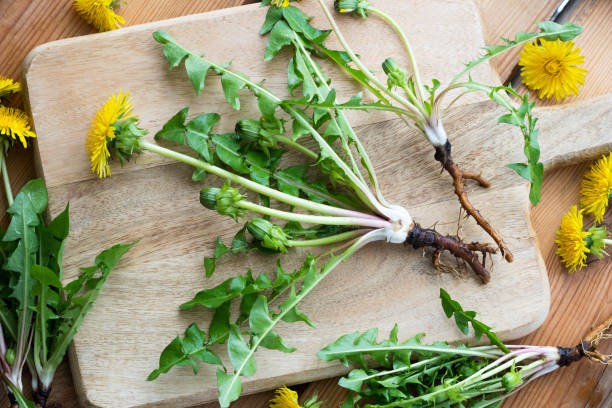
DANDELION – The leaves and root of this plant are known to be used in the herbal medicine of many Cultures, such as Korean, Native American and Arabic, where it is used for energy improvement and general health. Clinical trials have also shown that dandelion may reduce fatigue and promote immune health and different research has suggested that dandelion has anti-inflammatory and antioxidant effects.
Additionally, dandelion is considered to be a good substitute for caffeine and can help alleviate the fatigue that is brought on by the physical pain caused by certain chronic conditions.
ELDERFLOWER – This flower is good for heightening your energy levels and relieving stress. It also acts as a natural detoxification aid and can enhance liver function, by making your body sweat out toxins and eliminate waste. This natural process is very important for helping your body feel renewed and relaxed.
Elderflower also contains Vitamin B6, which helps to reduce tiredness and fatigue and contributes to a healthily functioning metabolism.
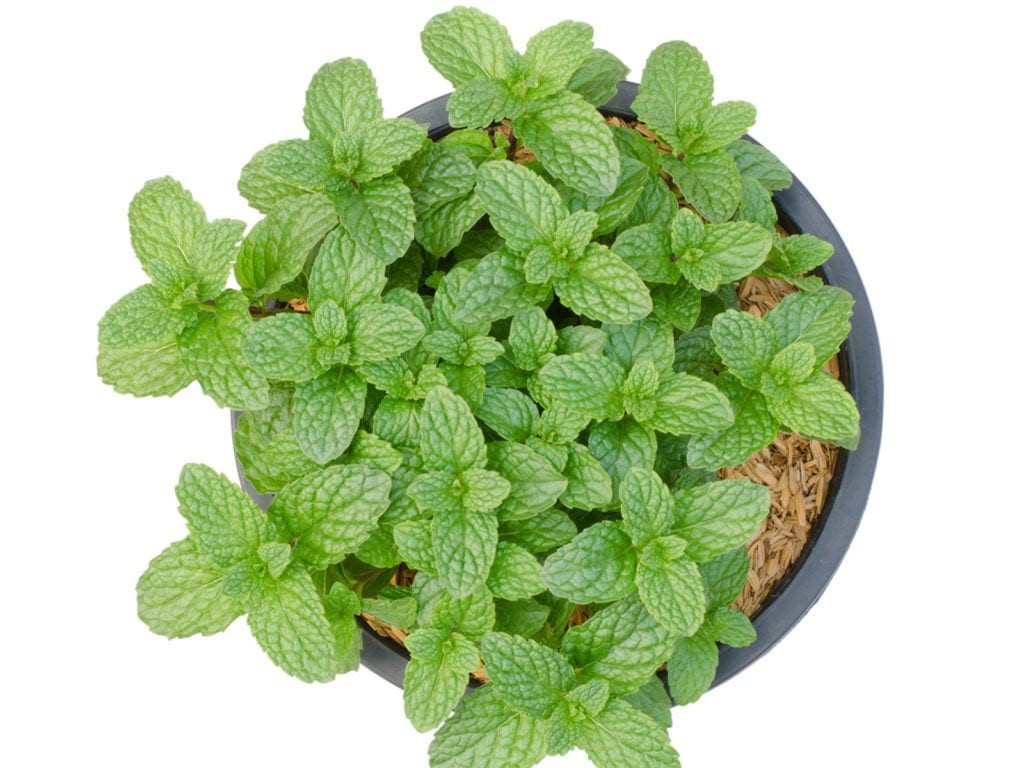
PEPPERMINT – Peppermint is a hybrid of spearmint (Mentha spicata) and water mint (Mentha aquatica). Just inhaling the minty fresh aroma of fresh peppermint leaves, or even peppermint essential oil, can help to boost your energy, mood, alertness and even athletic performance.
Several studies have shown that peppermint can reduce fatigue, boost alertness, improve memory and provide additional energy. One study even found that exposure to the aroma of peppermint essential oil could increase alertness and improve memory.
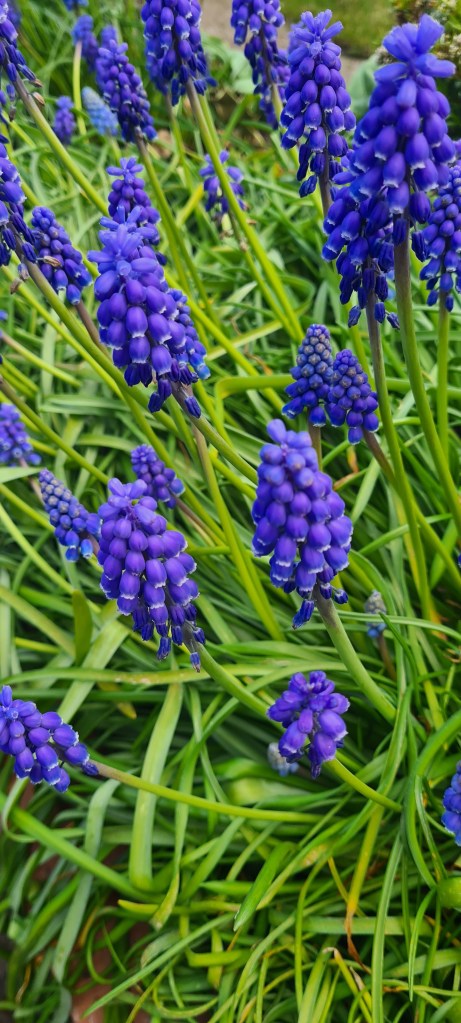
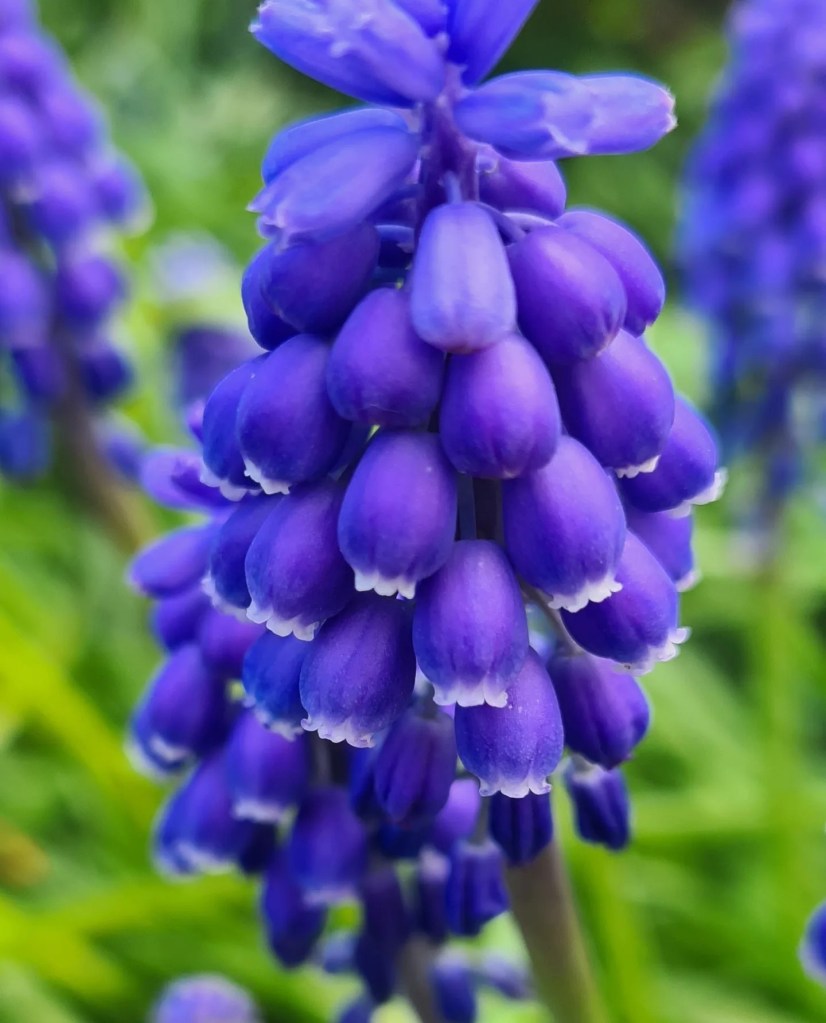
Native to southern Europe, Northern Africa, and western Asia, the grape hyacinth (or Muscari) is a symbol of power and confidence and can also symbolise mystery and creativity.
It has associations with the Greek Earth Goddess Demeter and, as she is known to be the guardian of women, it was often worn as part of a bridal crown.
The Ancient Greeks themselves however, also regarded the grape hyacinth as a flower of death, with many European cultures associating it with remembrance.
It is also the flower of the Olympian sun god Apollo and is a symbol of beauty, peace and commitment, but also of power and pride.
Hyacinths are also often found in Christian churches, as a symbol of happiness and love.
The flower has correspondences of tenderness and softness and is a perfect flower if you want to give flowers to your beloved!
BOTANY
The grape hyacinth is a bulbed flower, which is part of the lily family, and features pretty, purple/blue flowers. Its hollow leaves, which grow only from the base of the plant, resemble onion or garlic, but don’t have the same odor.
USES
The bulbs of the grape hyacinth have been used extensively in cooking and the edible flowers taste like bitter grapes. If you boil them in vinegar (in order to reduce the bitterness), they can be made into very tasty pickles.
The flowers can also be made into an essence, which is said to provide assistance with communication and networking. This essence is also meant to help with feelings exclusion or abandonment, either through crisis or self-defeating behaviors, and can help to address personal crisis, especially when having feelings of despair or feeling like you are out of touch with others.
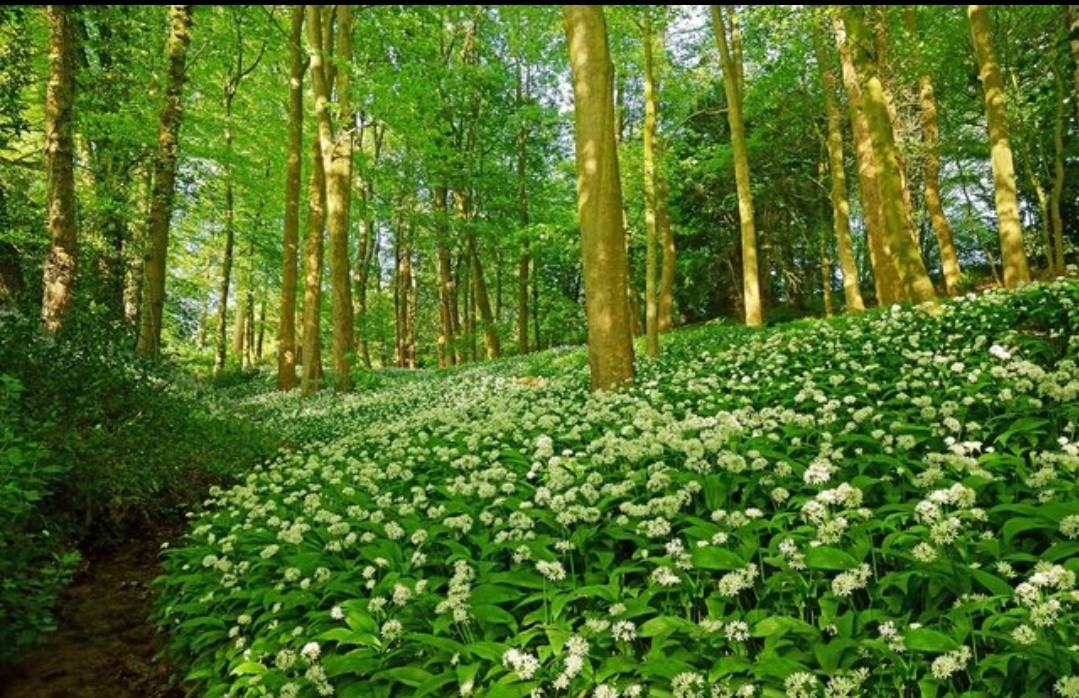
It’s that time of year when you’ll start seeing (and smelling!) wild garlic popping up in shady and damp woodlands, fields and hedgerows throughout Britain, Ireland and Europe.
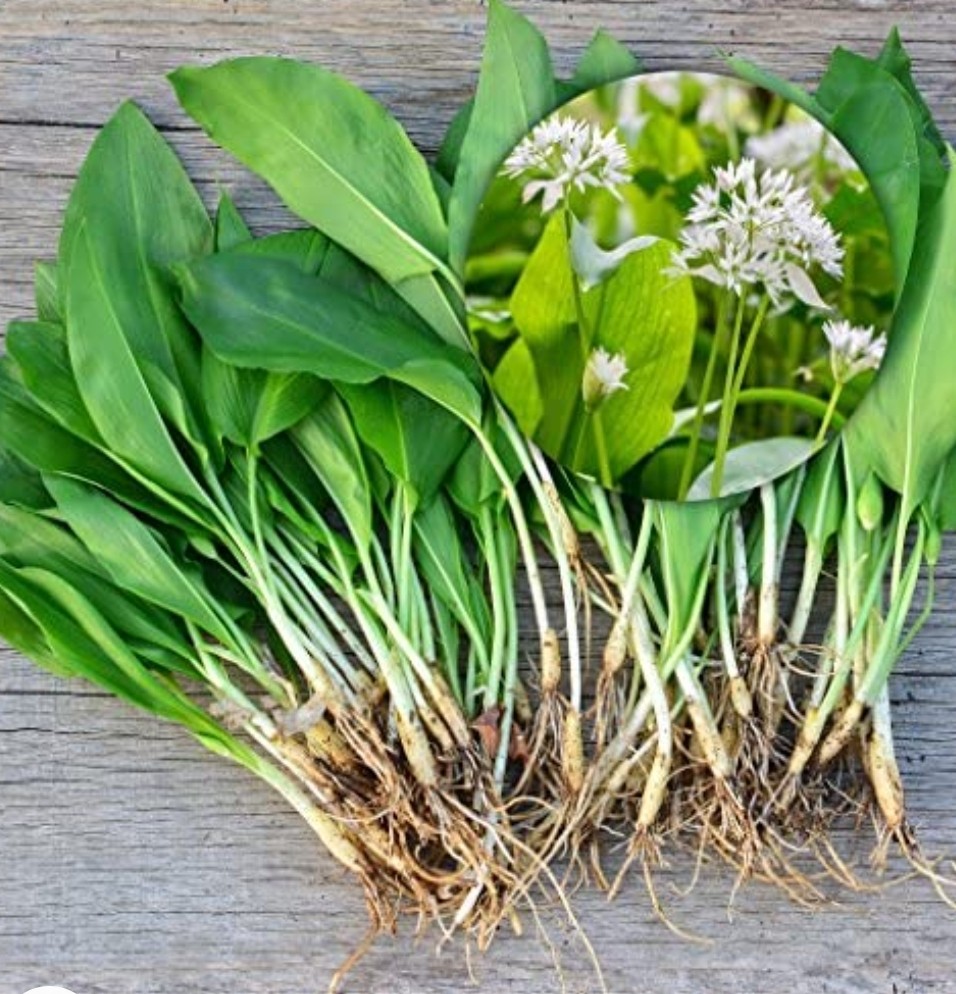
If you don’t know what it looks like, it has tiny white flowers and bright green leaves, but it can be quite scarce.
It is commonplace in ancient woods, where it creates a carpet of star shaped white blossoms, instead of the blue flooring of bluebells.
MAGICKAL PROPERTIES
In Witchcraft, wild garlic can be used just like regular garlic and is primarily used for protection, banishing and warding.
It can offer protection from break-ins when kept around the house or utilised in wards. It can also ward against nightmares, if used in sleep charms, and is useful for banishing negativity and unwelcome spirits. By this token, you could probably also use wild garlic to get rid of unwanted mindsets, habits, emotions, etc. Finally, it can protect the user from gossip and psychic attacks, and it can be used in wards of almost any purpose.
Garlic has strong associations with Hecate and the ancient Greeks would place garlic at cross roads as an offering to her.
MEDICINAL PROPERTIES
Wild garlic is useful in treating bronchitis, allergies and asthma, by helping to open the lungs and ease breathing. It is also a healthy antioxidant and has antimicrobial properties. Additionally, it can aid in preventing clots by thinning blood and therefore should be used in moderation, due to these properties.
It can also help to lower cholesterol and blood sugar levels and it’s juice can be applied directly, or in a poultice, to burns.
Please take care, when picking wild garlic, to only remove the leaves. Don’t pull too hard, or you can pull the bulb straight out too, which has the potential to spoil next years crop and contribute to it’s scarcity. As with all foraging, take only what you need and treat the site with care, so you can enjoy it again next year!
Also, don’t pick anything from the side of the road, as there is too much pollution there from cars, or where people regularly walk their dogs, as no one wants pee or poop in their food!!
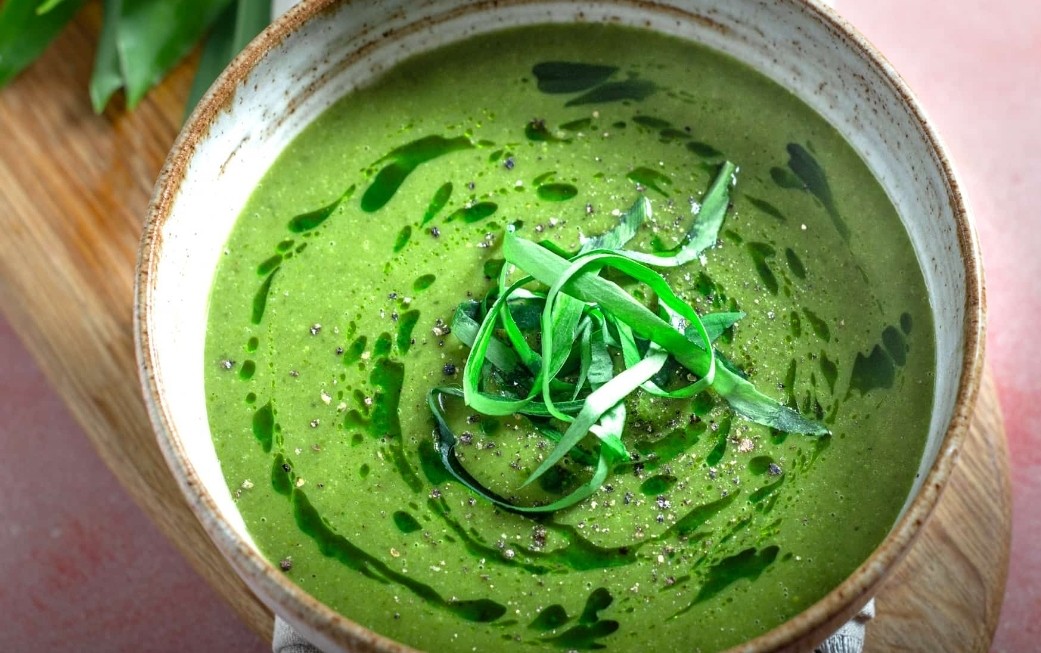
WILD GARLIC SOUP RECIPE
You’ll need the following ingredients:
• 40 g butter (or veggie/vegan alternative);
• 1 medium onion (chopped);
• 3 medium potatoes (peeled and diced);
• 1.5 ltr vegetable stock;
• 300 g wild garlic leaves (washed and patted dry);
• 100 ml double cream (or veggie/vegan alternative); and
• Salt and pepper.
Method:
Melt the butter over a medium heat, add the onions and saute until soft.
Add the vegetable stock and potatoes to the pan and simmer gently until the potatoes are fully cooked.
Add the wild garlic to the pan and allow to wilt for a couple of minutes.
Use a jug or hand blender (please be careful, as it’ll be boiling hot!) to blend the soup until you have a smooth and silky consistency.
Stir through the cream, season to taste and serve.
With it being the 17th March in a few days, and therefore St. Patrick’s Day, I thought I’d write a little about clover, as it’s synonymous with St. Patrick’s Day and the luck of the Irish.
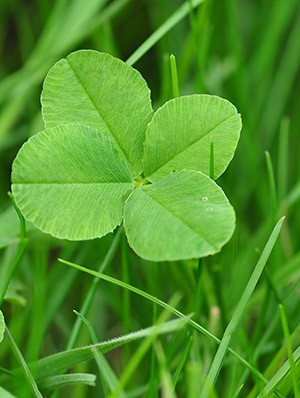
I know people usually refer to them as shamrocks, but they’re the same thing. A clover must have three leaves to be considered a shamrock. If the clover has more or less, then it is not a shamrock. Hence, all shamrocks are clovers, but not all clovers are shamrocks!!
There are a wide variety of different types of clover, all of which can be used in your magickal workings.
Clover has always been seen as a lucky plant, which is likely due to the religious connotations associated with the trifoliate (three) leaves, which symbolise the Holy Trinity. Due to this, they were often worn for protection and to deflect evil and spells.
On the other hand, four leaved clovers are often associated with the cross and were believed to bring the finder fortune. In some cultures, four-leaf clovers were worn to help a man avoid military service. They have also been used to enhance physic powers and to detect the presence of spirits. Placing a four leaved clover in your shoe is also supposed to increase your chances of meeting a rich new lover.
Two and five-leaved clovers are much less common than four-leaf clovers, but are still thought to possess potent magick.
Finding a two-leaf clover means you shall soon find a lover, whilst a five-leaf clover will bring riches, especially if worn.
In general, clover is believed to repel snakes, literally and figuratively, from your property if grown there.
It also brings general protection, whether worn or placed around the home, and aids in getting over heartbreak.
Furthermore, clover is one of the flowers of the Fae and can aid in your ability to see and work with them, whether sitting and meditating, or riding the hedge with clover attached to you. Clover blossoms can also be placed on your altar to attract the Fae, should you want to…..
White and red clover have some slightly different magickal properties too. White clover helps to break hexes, whilst red clover removes negative spirits, can be used in lust potions and brings prosperity.
Medicinal Uses
Red Clover is commonly used to treat children with skin problems, especially eczema and psoriasis. For adults, it is commonly used as an expectorant to treat coughs and bronchitis. However, it should be noted that red clover contains a hormone-like chemical called isoflavones which have caused reproductive failure and liver disease in cheetahs and sterility in livestock when consumed in large quantities. Furthermore, red clover is a blood thinner. So do not use red clover regularly and avoid if you are pregnant or breastfeeding.
RED CLOVER POULTICE
To make a poultice, combine dried red clover flowers with hot water in muslin and place on the affected area for 10-15 minutes. Red clover can also be used externally as a salve.
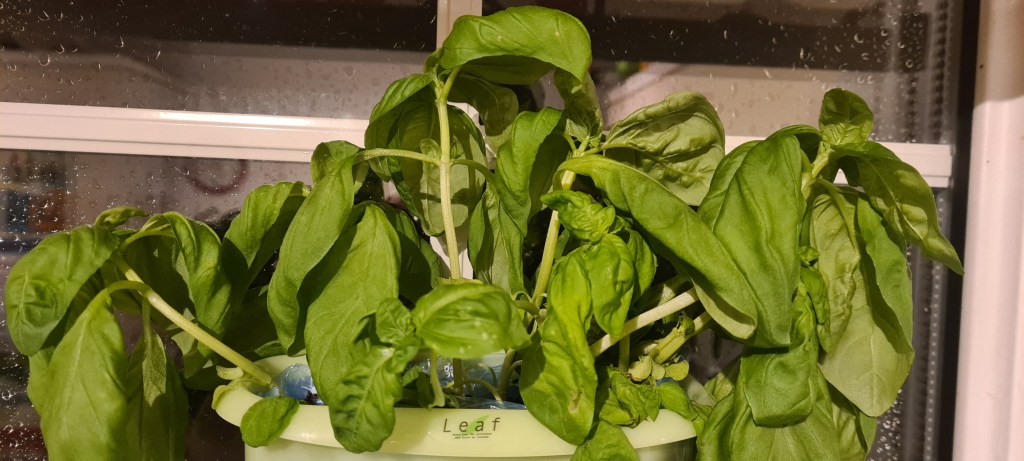
I grow a number of herbs in little pots that stick to the inside of my kitchen windows, as I like to have fresh herbs when I need them, they look really nice and the plants always get plenty of sunlight.
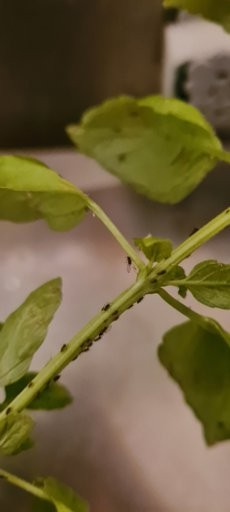
A few weeks ago I discovered (whilst talking to and tending to my herbs, as you do….), that my beloved Basil plant, which I’ve been growing for MONTHS, had dreaded aphids on him!
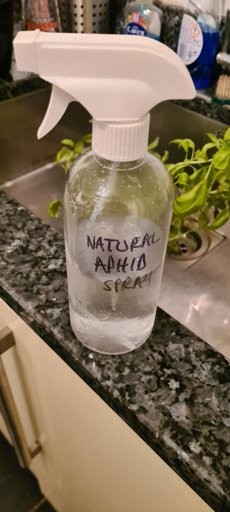
I whipped up a quick batch of natural aphid spray to gently encourage them to vacate (some may be sadly killed in the process and, for that, I am very sorry).
I used the following:
• Clean spray bottle (I reuse everything I can, so jam and pickle jars become herb containers or jar spells, old candle containers get new candles made inside them from soy wax, colourant wax and essential oils, and spray bottles, which have contained liquids that aren’t too toxic (fabulousa or febreeze spray bottles are ideal for this, but avoid anything that contained bleach or other harmful chemicals), get thoroughly washed out and reused, as more natural cleaning product bottles);
• 400ml fresh filtered water (we have hard water so everything we drink, cook with or give to the dogs gets filtered);
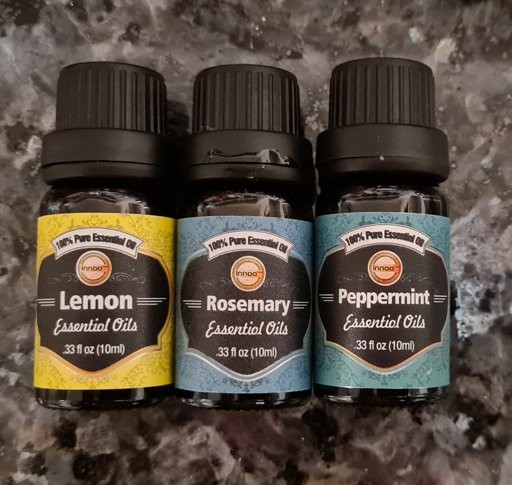
• 10-12 drops Rosemary essential oil;
• 10-12 drops Peppermint essential oil; and
• 10-12 drops Lemon essential oil.
I popped all the ingredients into the spray bottle, gave it a little shake and took my plant outside (to give them a chance to escape and bother someone else’s plants!) to spray the heck out of it!
I checked back the next day and they were all gone! I then gave my Basil a good spray with moonwater, as a little treat to help it recover from the vicious aphid onslaught and because I use this Basil in both my craft and my cooking, so I want to remove as much essential oil off the plant as I can.
Mr. Basil is doing very well now and not an interloper in sight!
I have been fascinated by witchcraft, forteana, the paranormal and cryptozoology (I had a subscription to the Fortean Times from about 11/12 years old onwards) for as long as I can remember (I am 44 now). There’s a bit of paranormal history in my family too, with both my mum and my grandma on my dad’s side having had encounters with Spirits on a couple of occasions. My mum was also once told by a psychic medium that she had latent psychic abilities that she should develop, but she never did as far as I’m aware. I was also one of those kids that had an imaginary friend. Mine was a pony called Poppet and he was with me for years!
Looking back, I think my journey into witchcraft started when I was about 12 or 13. I found some dream books and books on herbs in the loft at my parents house that were my mum’s. I started foraging for the herbs in the books, or finding them in our garden, and made teas, tinctures, soups and condiments, anything I could really. I once made my dad nettle soup, which was truly awful, but, bless him, he ate every drop and pretended to love it! I also persuaded my mum to buy me more herb and natural remedy books from the garden centre too.
I also had what I now realise as being an altar of sorts, from about 13/14 onwards (without actually realising what it was), which was a big shelf above my radiator, over which I painted a big Mandala on the wall with a Yin Yang symbol in the middle.
On this shelf I kept interesting stones, fossils and minerals I’d found, shells and feathers, bits of plants and dried flowers. I also burned incense, had candles and drank herbal teas, sometimes with added herbs from the garden or spices from my mums spice rack. Here I’d make wishes on candles to do well in a test, or to get that boy I liked to notice me, which were in essence my first spells. I’d also write things down on paper and burn them, which I now know is a way of manifesting your desires.
I used shufflemancy with my CDs, and my own version of bibliomancy with my books, to make decisions, long before I found out these were forms of divination. I would also have little fires at the bottom of the garden and just sit out there, watching the moon and stars whilst drinking my tea.
We didn’t have the internet at home when I was younger and the local librarian was loathed to lend me Stephen King books, let alone anything to do with witchcraft or the occult, so I had no choice but to make things up as I went along. Even at university there was limited access to the internet! It’s so much easier nowadays for people to do research, watch videos and join online groups and communities to learn about witchcraft. I wish there’d have been something like that when I was younger.
It’s only really been since my mid 30’s that I realised the things I’ve been intuitively doing since I was a young teen could be classed as witchcraft. I just didn’t realise, because these things just came naturally to me. As I’ve got older, the pull towards properly learning and researching has become stronger and our house has become more cluttered with stones, feathers, shells and dried flowers I’ve found, in addition to crystals.
Over the years I’ve read so much more into it and got so invested in the idea and history of witchcraft, that to NOT develop it was becoming impossible to resist!! So here I am! I’ve only recently started to refer to myself as a Witch, or even been comfortable in telling people about it.
However, I found a few communities for Witchcraft online and became an active member, writing blogs and articles on things I’d researched, or spells/rituals I’d developed/undertaken and hosted/co-hosted chats on crystals, nature, kitchen witchery and candle magick etc. I also found out, through helping and advising the younger or more inexperienced members of these communities, that I knew a lot more about witchcraft than I realised.
For me, the next logical step was setting up this website, and associated social media, as a way of recording what I know and have done and to help others starting out in their journeys into witchcraft
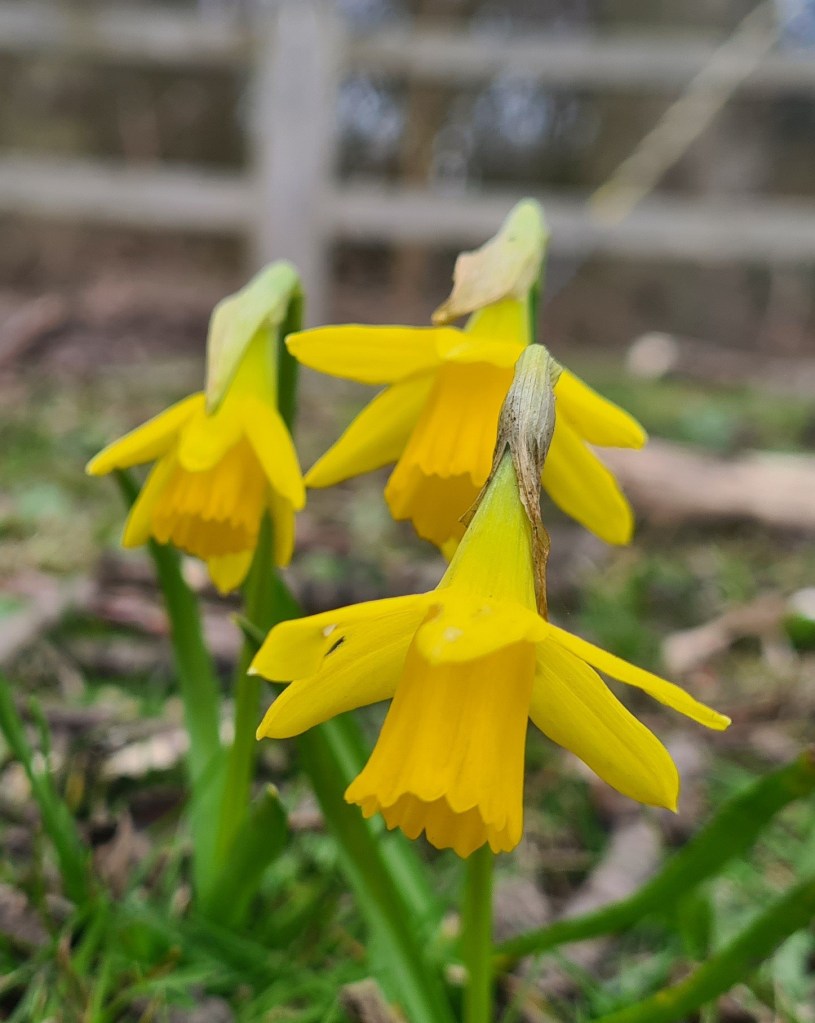
On our walk out with the dogs this afternoon, there were lots of lovely daffodils, so I thought I’d write a blog post to honour them, and add some photos I took, as they make me happy and signal that Spring is definitely on the way!
*PLEASE NOTE: Daffodils are highly toxic and should not be used medicinally or consumed. Even biting down on a stem can cause chills, dizziness and even fainting. Enjoy their beauty, have them in vases around your house, but be extra careful children or pets do not consume them, due to their toxicity.**
Daffodils are sometimes referred to as the “flower of March,” as they characterise of the start of Spring. They’re seen as a symbol of new life, fertility and growth.
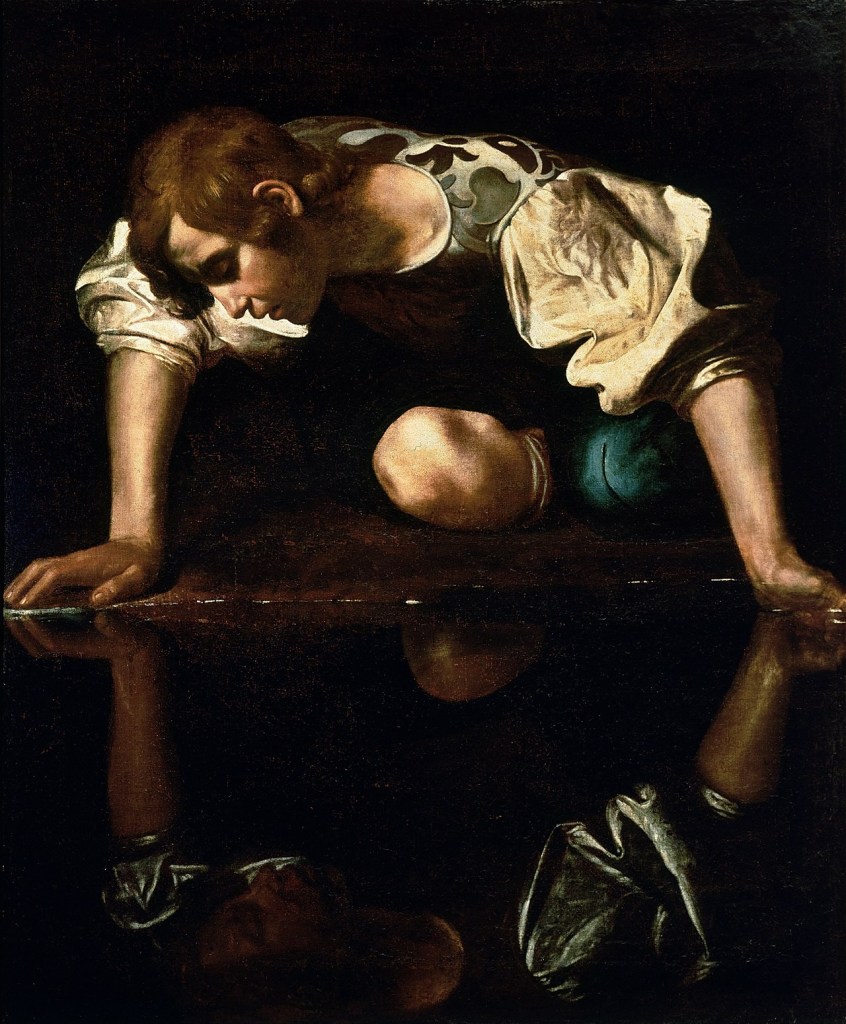
Daffodils belong to the plant genus Narcissus, which is a name you may have heard of before, and which is steeped in Greek mythology.
According to Greek mythology, Narcissus was a handsome and charismatic young man who was able to charm almost anyone. Upon seeing him, the wood nymph Echo, who had been cursed by Hera to be unable to speak properly, and instead repeat only the last words addressed to her, fell deeply in love with him. Narcissus spurned her love and told her that he’d rather die than give himself to a wood nymph like her.
Echo, heartbroken, retreated to a cave and, without having any appetite or thirst, withered and starved away, until the only things left of her were dust and her voice.
When Nemesis heard of Echo’s fate, she wanted revenge for how poor Echo had been treated, so she led Narcissus to a pond near Echo’s cave, wherein he fell in love with his own reflection.
Narcissus could not leave his own reflection out of love and vanity and starved to death, just like Echo. But, before he died, Narcissus cried out to his reflection “Farewell, dear boy. Beloved in vain.” Echo’s voice repeated his last words from the cave as Narcissus drew his last breath. To this day, Echo still repeats the last words or phrases in caves or labyrinths.
Other stories tell a slightly different tale of the Gods, scared that Narcissus would waste away, turned him into daffodils. In other accounts, Narcissus drowned whilst trying to hug his reflection, and daffodils sprouted on the bank of the pond where he fell.
Daffodils are considered lucky flowers. One particular folktale says that, if you make a deliberate effort not to step on them and crush them, fortune will favor you with abundance.
Also, if you gift someone daffodils, they too will have good luck, but you need to make sure you give them an entire bunch, because a single flower will bring poverty and ill fortune.
In parts of the British Isles, including Wales, if you are the first your neighbours to spot the first daffodils of Spring, it is said you’ll see far more gold than silver come to your home over the coming year. However, seeing a daffodil growing alone is said to bring the opposite.
Daffodils are also used to represent love. Again, back to Greek mythology, some recounts of the famous Myths say that the daffodil was the flower Hades used to distract Persephone, before stealing her away to the underworld to be his wife.
In some Middle Eastern traditions, the daffodil is considered to be an aphrodisiac. Either way, the daffodil has strong connections with love, which is why it is one of the best flowers to use during love spells and rituals.
Also, due to its association with Hades, the daffodil is sometimes associated with the underworld and death, making it a perfect flower for funeral arrangements to honor the deceased.
Because the daffodil is one of the first flowers to bloom in the Spring, it also has strong associations with fertility and it is said that having a bouquet of daffodils in the bedroom can increase the chance of conception. Daffodils can also be used during fertility rituals to increase the spells potency.
Here’s a number of ways you could use daffodils in your magickal workings:
• Put fresh daffodils in a vase in your home to bring you abundance.
• Place daffodils on your altar during any workings related to love, especially if the relationship is new and you’re still trying to figure things out.
• You can add potted daffodil bulbs to your altar for spring (Ostara) celebrations, along with other spring flowers such as hyacinth, crocus and snowdrops.
• Wear this flower close to your heart to draw love, but be careful that your love is reciprocated.
Following on from my post yesterday about my Altar, I wanted to show you a way you can still have an Altar, but for it to be a bit more discreet. So this will be perfect if you’re in the Broom Closet, don’t have the room, travel frequently, not allowed by your parents or, like me, enjoy taking your practice out into nature.
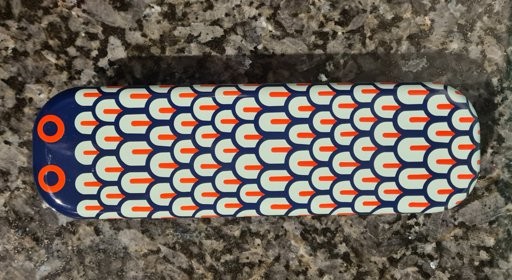
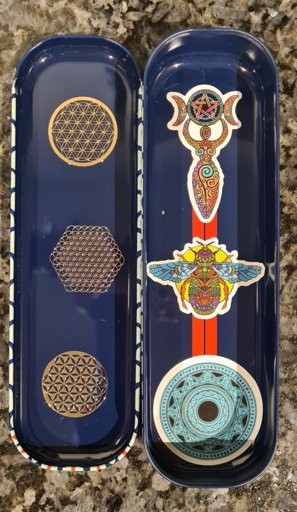
I found this cute oblong metal tin (I think it’s supposed to be a pencil case) in IKEA a while back, which is decorated to look like a little snake!!
On the inside, I personalised it with some stickers on the bottom part of the tin (from the top down):
• Triple Moon Fertility Goddess to represent my lifelong struggle with infertility;
• A beautiful and colourfull beetle to represent my love for nature; and
• A Mandala to represent my spiritual journey.
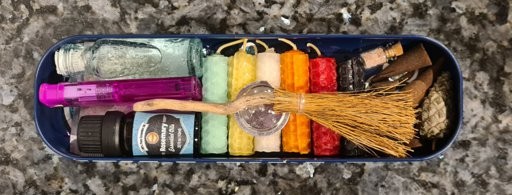
Inside the lid, I have three metal flower of life Metatron’s cube stickers, to represent the journey of energy throughout the universe, and of balance within the universe, to aid with meditation. (I am a bit annoyed I put them on a bit wonky, as they’re so thin, I can’t get them off again without ruining them). The contents of my travel altar are as follows:
• Mini besom to symbolically cleanse and purify wherever I decide to do any work;
• A lighter for my candles and incense;
• Mini green, yellow, white, orange, red and black rolled beeswax candles, for any spells, rituals or to signify the fire element when casting my circle;
• A metal disc incense holder;
• The tiniest bottle of Himalayan pink salt to represent the earth element when setting up a protective working space;
• Small glass jar of Samhain Blue Moon water to signify the water element when circle casting;
• ‘Meditation’ scent incense cones to represent the element of air;
• Clear quartz teardrop, to use as a substitute for any other crystal I may need;
• Rosemary essential oil, as Rosemary can be a substitute for any other herb/essential oil I may need;
• Pine cone to signify health and prosperity, healing and protection; and
• Chamomile tea bags, because they’re just lovely.
I just love how cute and organised it is (and that it all fits!) and I can’t wait for the warmer months to use it outside!
Despite being a secular Witch, I still have an Altar.
Mine is not dedicated to various Deities from different Pantheons, but to nature. This is represented by shells, pebbles, feathers, a mink skull, crystals, candles, lots of cute drawers containing herbs, dried flowers, nuts, berries and seaweed I’ve foraged, my singing bowl, driftwood and pots of seasalt and fossilized sharks teeth.
It also contains items that remind me of my parents and photos of the day my husband and I got engaged and the day we got married. It’s a very special place to me.
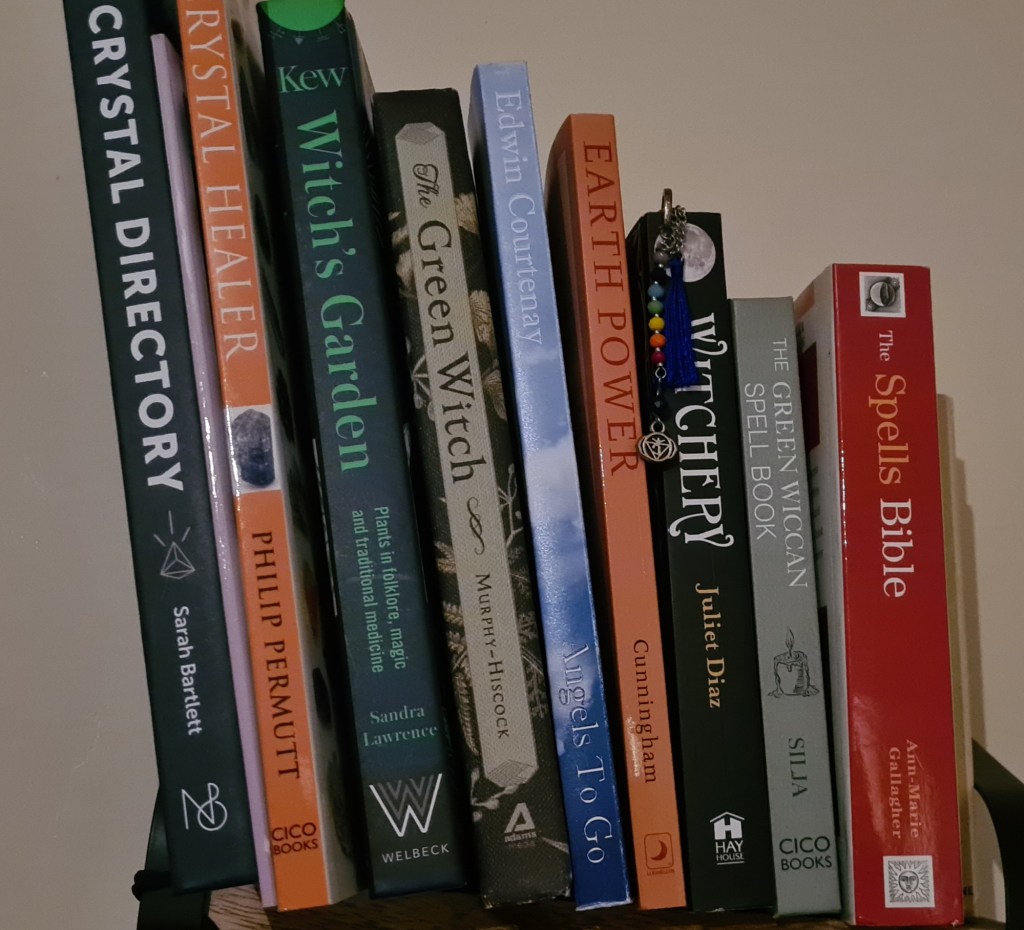
I also have some little shelves on the wall above it, where I store more of my crystals, drawer of supplies and some of my many Witchcraft books.













 Melusina The Green Witch