I am suffering with a nasty chest infection, my second in 12 months, and I’m feeling really ill with it. I’ve been to the doctors and have been prescribed antibiotics, steroids and an inhaler, but I want to boost my immune system as much as I can at home too.
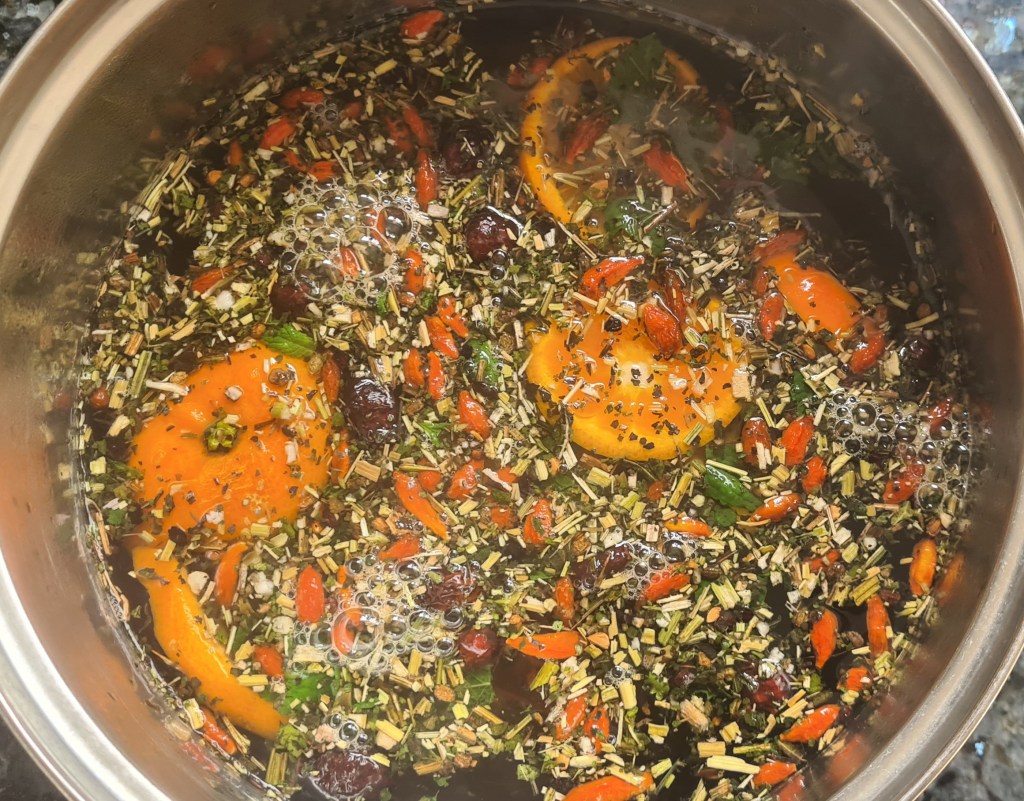
Therefore I’ve developed this tea today and am brewing up a large batch (enough for about 4 cups worth) to last me throughout the rest of the day and evening.
**Disclaimer: Any medicinal benefits given here are a product of my own research and as such should not be taken over the advice of trained medical professionals. If you are ill, please go and see a doctor. Always make sure that anything you consume is 100% safe. If you are pregnant, consult your doctor or midwife before consuming something you haven’t tried before.**
INGREDIENTS
Fresh peppermint (a few sprigs roughly chopped) – The antioxidants found in mint can fight inflammation in your body and also include compounds, such as terpinene, quercetin, and tocopherols, which have immune-boosting and neuroprotective (the ability for a therapy to prevent neuronal cell death by intervening in and inhibiting the pathogenetic cascade that results in cell dysfunction and eventual death) effects.
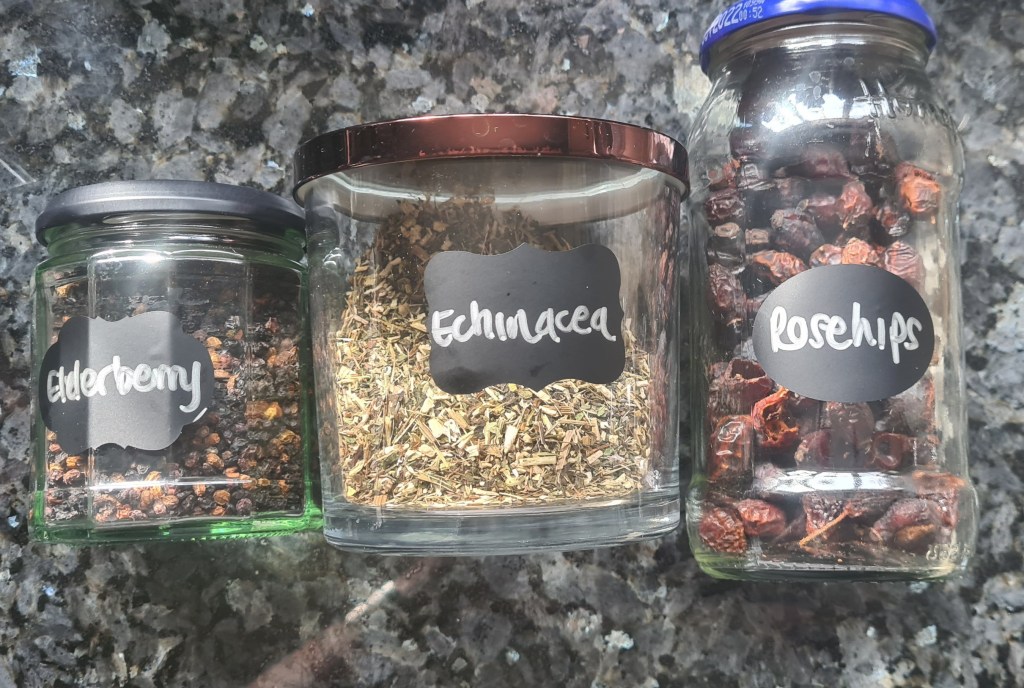
Dried elderberries (heaped tablespoon) – The berries (and flowers) of elderberry are packed with antioxidants and vitamins that may boost your immune system. They could also help tame inflammation, lessen stress and help protect your heart, too. Some experts also recommend elderberry to help prevent and ease cold and flu symptoms.
Dried goji berries (heaped tablespoon) – These cheerful red berries contain a number of healthy antioxidants which are known for their immune-boosting qualities and their ability to fight harmful free radicals and inflammation. They also contain large amounts of vitamins A and C, similar to other berries.
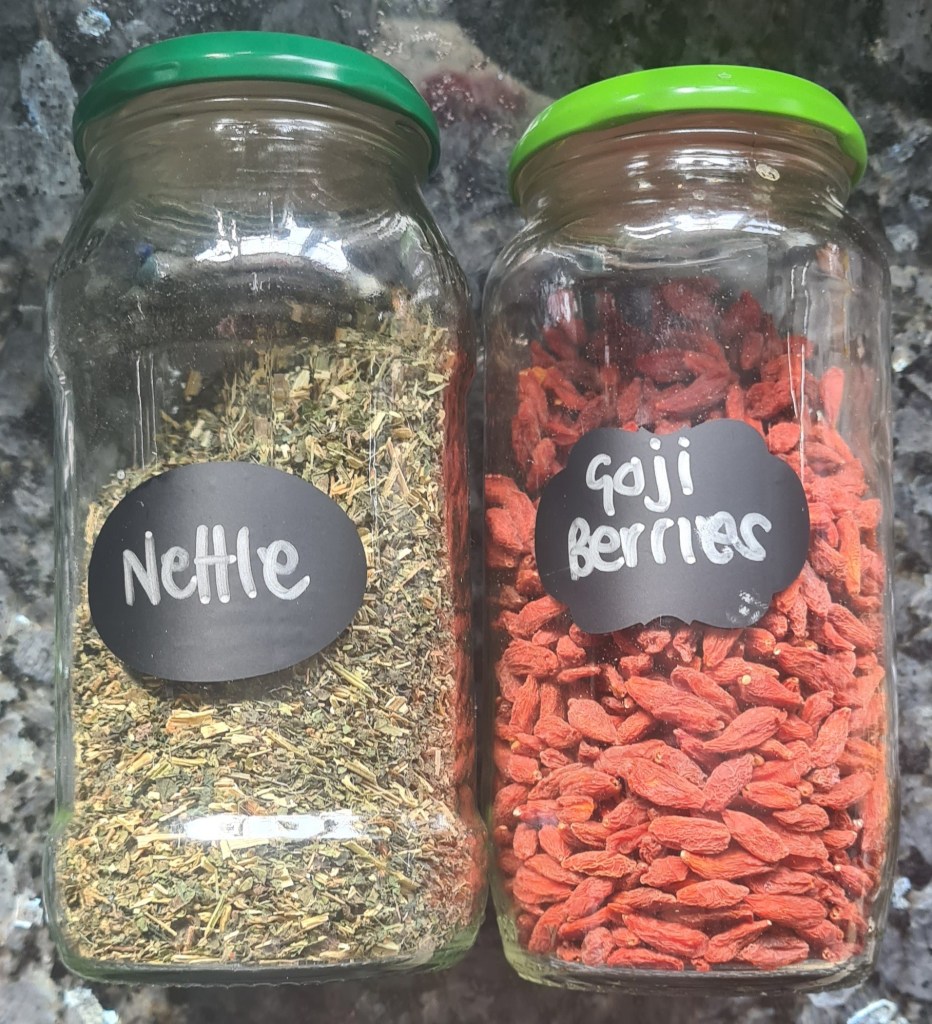
Dried echinacea (tablespoon) – Studies suggest that echinacea contains active substances that boost immune function, relieve pain, reduce inflammation and have antiviral and antioxidant effects.
Dried nettle (tablespoon) – The nettle plant contains several immune-boosting compounds, including flavonoids, carotenoids and vitamins A and C. These antioxidants help protect immune cells against damage that can weaken immune function. Research also shows nettle extract strengthens the immune response, encouraging immune cell activity.
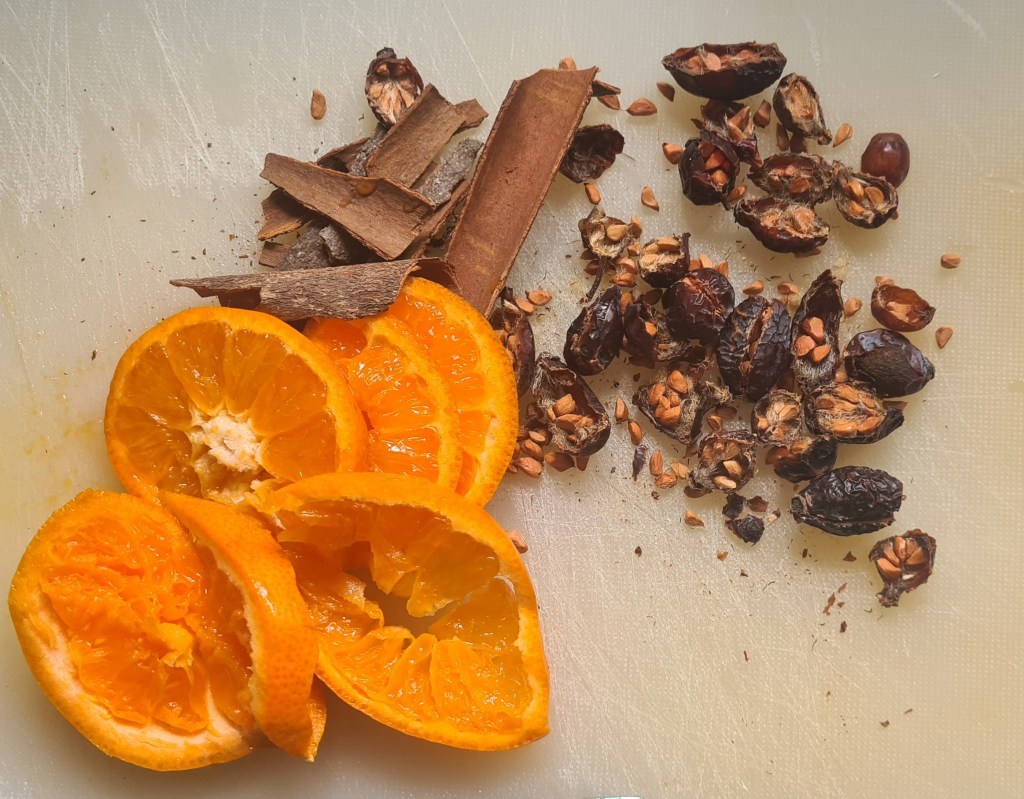
Dried rosehips (about 15 halved) – Due to its high levels of antioxidants, rosehip tea may also help to boost your immune system. Please be careful with the seeds, they’re hard as diamonds!!
Cinnamon bark (a couple of pieces broken up) – Studies show that this spice and its antioxidants have potent anti-inflammatory properties and helps your body fight infections and repair tissue damage.
Sliced whole tangerine – The Vitamin C found in tangerines (and other citrus fruits) is a powerful antioxidant. Additionally, tangerines provide potassium and B complex vitamins, namely B1, B6, and B9, or thiamine, pyridoxine, and folate, respectively.
METHOD
Put all the ingredients into a pan, cover with about 5 cups of boiling water and gently simmer for ten minutes. Strain through a sieve and/or a clean towel/muslin and decant to a cup. Sweeten to taste with honey, brown sugar, agave syrup or your sweetener of choice. Drink and enjoy.
Sources
https://www.healthline.com/nutrition/mint-benefits#:~:text=Its%20antioxidants%20have%20been%20shown,9%20%2C%2010%20%2C%2011%20).
https://www.sciencedirect.com/topics/neuroscience/neuroprotection#:~:text=Neuroprotection%20is%20defined%20as%20the,cell%20dysfunction%20and%20eventual%20death.
https://www.medicalnewstoday.com/articles/322693#:~:text=Goji%20berries%20contain%20healthy%20antioxidants,berries%2C%20including%20blueberries%20and%20raspberries.
https://www.webmd.com/diet/elderberry-health-benefits#:~:text=The%20berries%20and%20flowers%20of,ease%20cold%20and%20flu%20symptoms.
https://www.thehealthy.com/home-remedies/nettle-tea-benefits/#:~:text=The%20nettle%20plant%20contains%20several,response%2C%20encouraging%20immune%20cell%20activity
https://www.mountsinai.org/health-library/herb/echinacea#:~:text=Several%20laboratory%20and%20animal%20studies,%2C%20antiviral%2C%20and%20antioxidant%20effects.
https://www.healthline.com/nutrition/rose-hips#:~:text=Due%20to%20its%20high%20levels,disease%20and%20type%202%20diabetes.
https://www.healthline.com/nutrition/tangerine-benefits#1.-Packed-with-nutrients
https://www.healthline.com/nutrition/10-proven-benefits-of-cinnamon#TOC_TITLE_HDR_4



 Melusina The Green Witch