Antioxidant Tea

I am suffering with a nasty chest infection, my second in 12 months, and I’m feeling really ill with it. I’ve been to the doctors and have been prescribed antibiotics, steroids and an inhaler, but I want to boost my immune system as much as I can at home too.

Therefore I’ve developed this tea today and am brewing up a large batch (enough for about 4 cups worth) to last me throughout the rest of the day and evening.

**Disclaimer: Any medicinal benefits given here are a product of my own research and as such should not be taken over the advice of trained medical professionals. If you are ill, please go and see a doctor. Always make sure that anything you consume is 100% safe. If you are pregnant, consult your doctor or midwife before consuming something you haven’t tried before.**

INGREDIENTS

Fresh peppermint (a few sprigs roughly chopped) – The antioxidants found in mint can fight inflammation in your body and also include compounds, such as terpinene, quercetin, and tocopherols, which have immune-boosting and neuroprotective (the ability for a therapy to prevent neuronal cell death by intervening in and inhibiting the pathogenetic cascade that results in cell dysfunction and eventual death) effects.

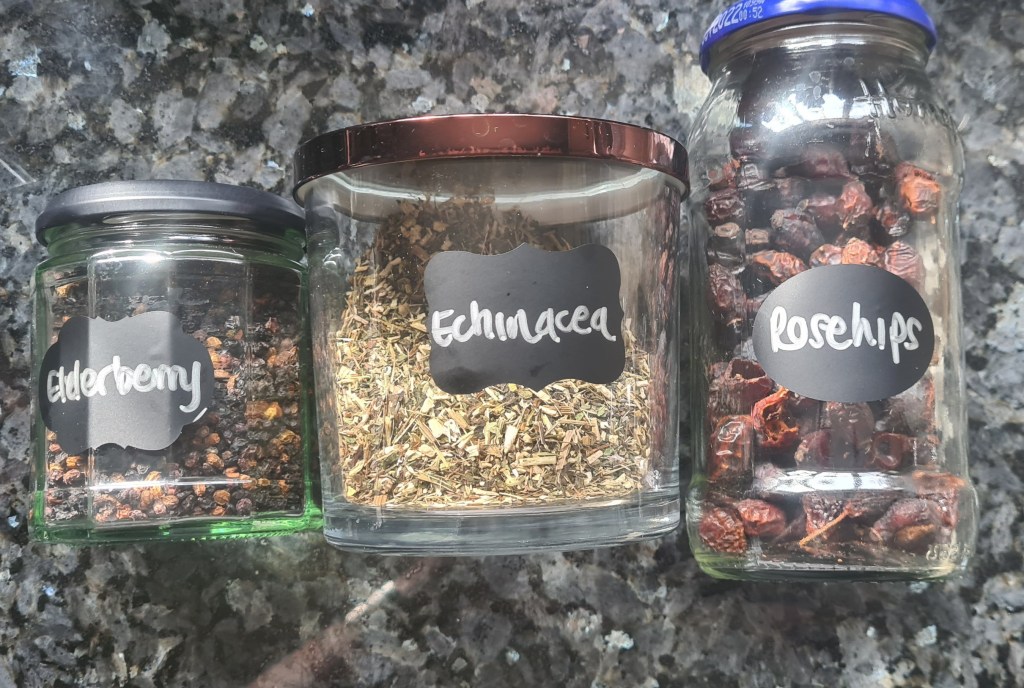
Dried elderberries (heaped tablespoon) – The berries (and flowers) of elderberry are packed with antioxidants and vitamins that may boost your immune system. They could also help tame inflammation, lessen stress and help protect your heart, too. Some experts also recommend elderberry to help prevent and ease cold and flu symptoms.

Dried goji berries (heaped tablespoon) – These cheerful red berries contain a number of healthy antioxidants which are known for their immune-boosting qualities and their ability to fight harmful free radicals and inflammation. They also contain large amounts of vitamins A and C, similar to other berries.
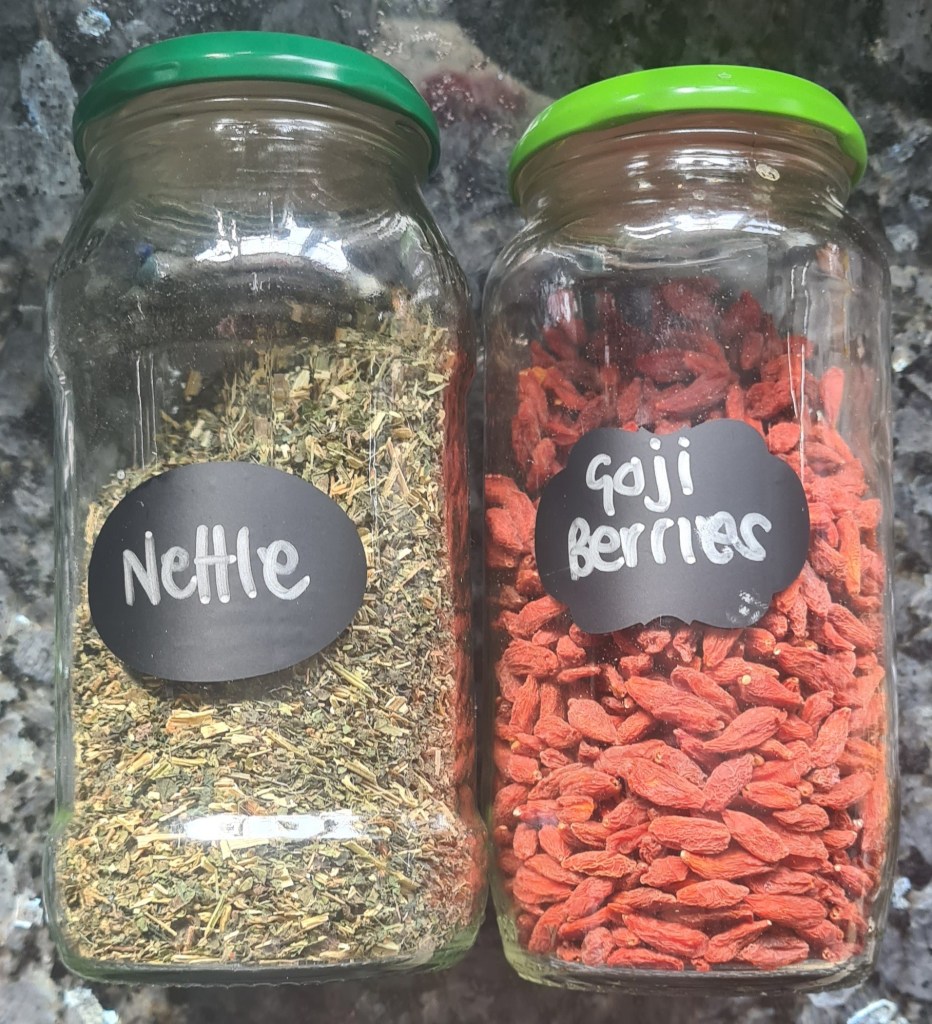
Dried echinacea (tablespoon) – Studies suggest that echinacea contains active substances that boost immune function, relieve pain, reduce inflammation and have antiviral and antioxidant effects.

Dried nettle (tablespoon) – The nettle plant contains several immune-boosting compounds, including flavonoids, carotenoids and vitamins A and C. These antioxidants help protect immune cells against damage that can weaken immune function. Research also shows nettle extract strengthens the immune response, encouraging immune cell activity.

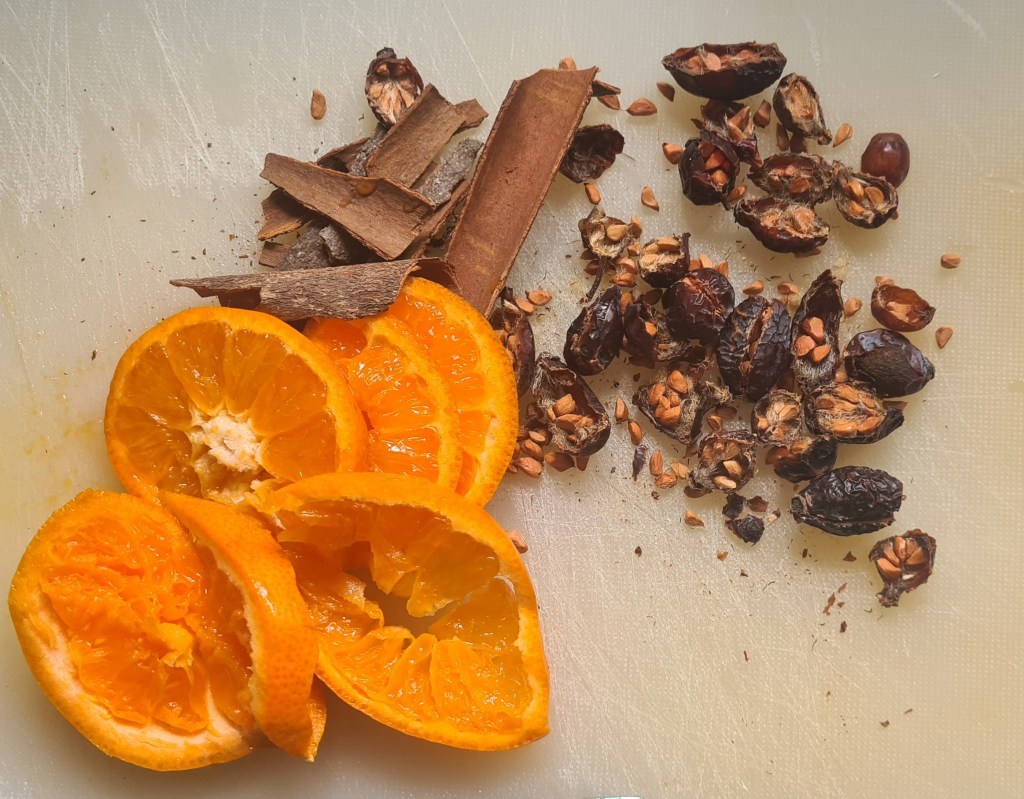
Dried rosehips (about 15 halved) – Due to its high levels of antioxidants, rosehip tea may also help to boost your immune system. Please be careful with the seeds, they’re hard as diamonds!!
Cinnamon bark (a couple of pieces broken up) – Studies show that this spice and its antioxidants have potent anti-inflammatory properties and helps your body fight infections and repair tissue damage.

Sliced whole tangerine – The Vitamin C found in tangerines (and other citrus fruits) is a powerful antioxidant. Additionally, tangerines provide potassium and B complex vitamins, namely B1, B6, and B9, or thiamine, pyridoxine, and folate, respectively.
METHOD

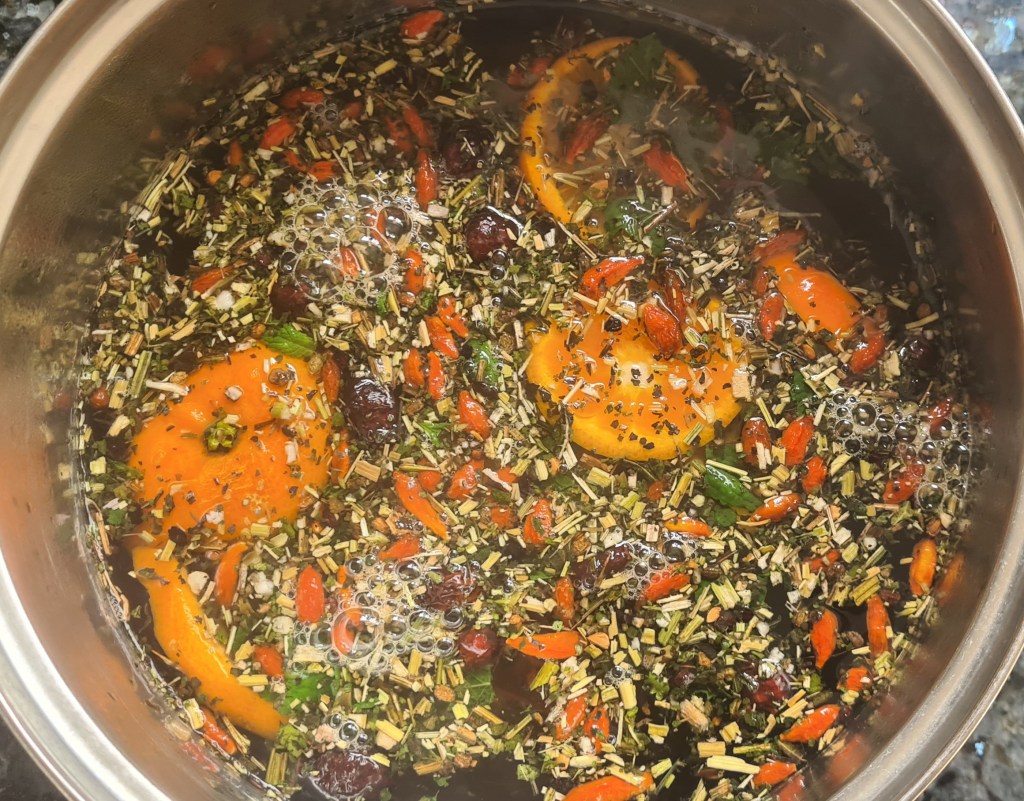
Put all the ingredients into a pan, cover with about 5 cups of boiling water and gently simmer for ten minutes. Strain through a sieve and/or a clean towel/muslin and decant to a cup. Sweeten to taste with honey, brown sugar, agave syrup or your sweetener of choice. Drink and enjoy.
Sources
https://www.healthline.com/nutrition/mint-benefits#:~:text=Its%20antioxidants%20have%20been%20shown,9%20%2C%2010%20%2C%2011%20).
https://www.sciencedirect.com/topics/neuroscience/neuroprotection#:~:text=Neuroprotection%20is%20defined%20as%20the,cell%20dysfunction%20and%20eventual%20death.
https://www.medicalnewstoday.com/articles/322693#:~:text=Goji%20berries%20contain%20healthy%20antioxidants,berries%2C%20including%20blueberries%20and%20raspberries.
https://www.webmd.com/diet/elderberry-health-benefits#:~:text=The%20berries%20and%20flowers%20of,ease%20cold%20and%20flu%20symptoms.
https://www.thehealthy.com/home-remedies/nettle-tea-benefits/#:~:text=The%20nettle%20plant%20contains%20several,response%2C%20encouraging%20immune%20cell%20activity
https://www.mountsinai.org/health-library/herb/echinacea#:~:text=Several%20laboratory%20and%20animal%20studies,%2C%20antiviral%2C%20and%20antioxidant%20effects.
https://www.healthline.com/nutrition/rose-hips#:~:text=Due%20to%20its%20high%20levels,disease%20and%20type%202%20diabetes.
https://www.healthline.com/nutrition/tangerine-benefits#1.-Packed-with-nutrients
https://www.healthline.com/nutrition/10-proven-benefits-of-cinnamon#TOC_TITLE_HDR_4
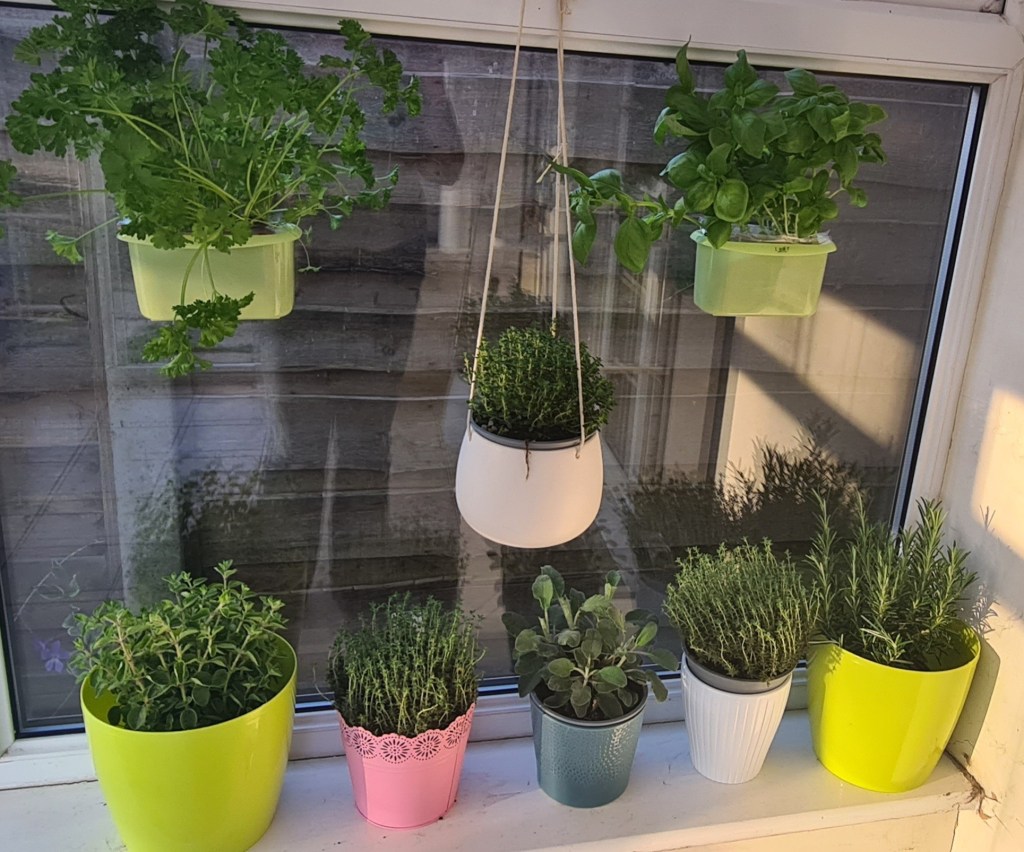
Plant Apothecary

I don’t have much luck with outside plants, due to the crap British weather and the local wildlife that gets into our garden. Therefore, I’ve decided that this year I’ll grow lots of things in the conservatory on the back of the house (which is where our dogs Wade and Wilson and have their beds and bowls, as they sleep there at night and eat their meals in there too).

I found some great potted herbs at Costco and some others in Aldi, so here I have three types of thyme, flat leaved parsley, basil, rosemary, sage and oregano.

Today I’ve planted up into compost slices of cherry tomatoes (as the seeds in the tomatoes will germinate once the slice rots down) and some nasturtiums (trailing orange flowers who’s flowers and leaves you can eat). Nasturtiums are also great companion plants (which is the planting of different crops in proximity for any of a number of different reasons, including pest control, pollination, providing habitat for beneficial insects etc) for tomatoes.

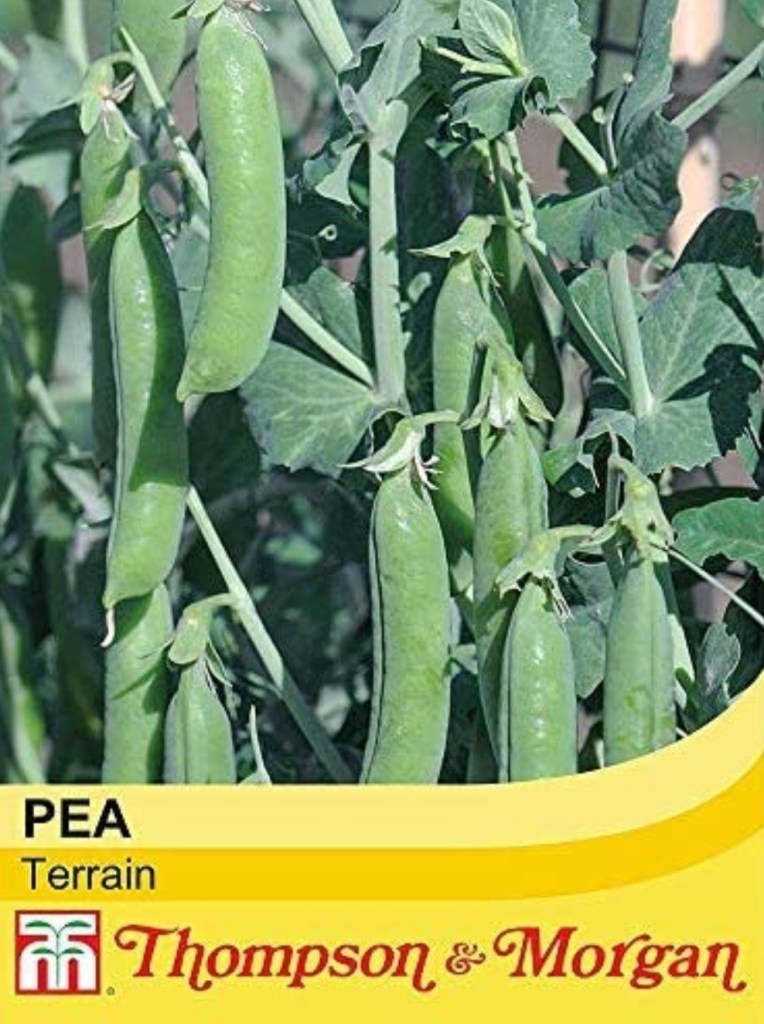
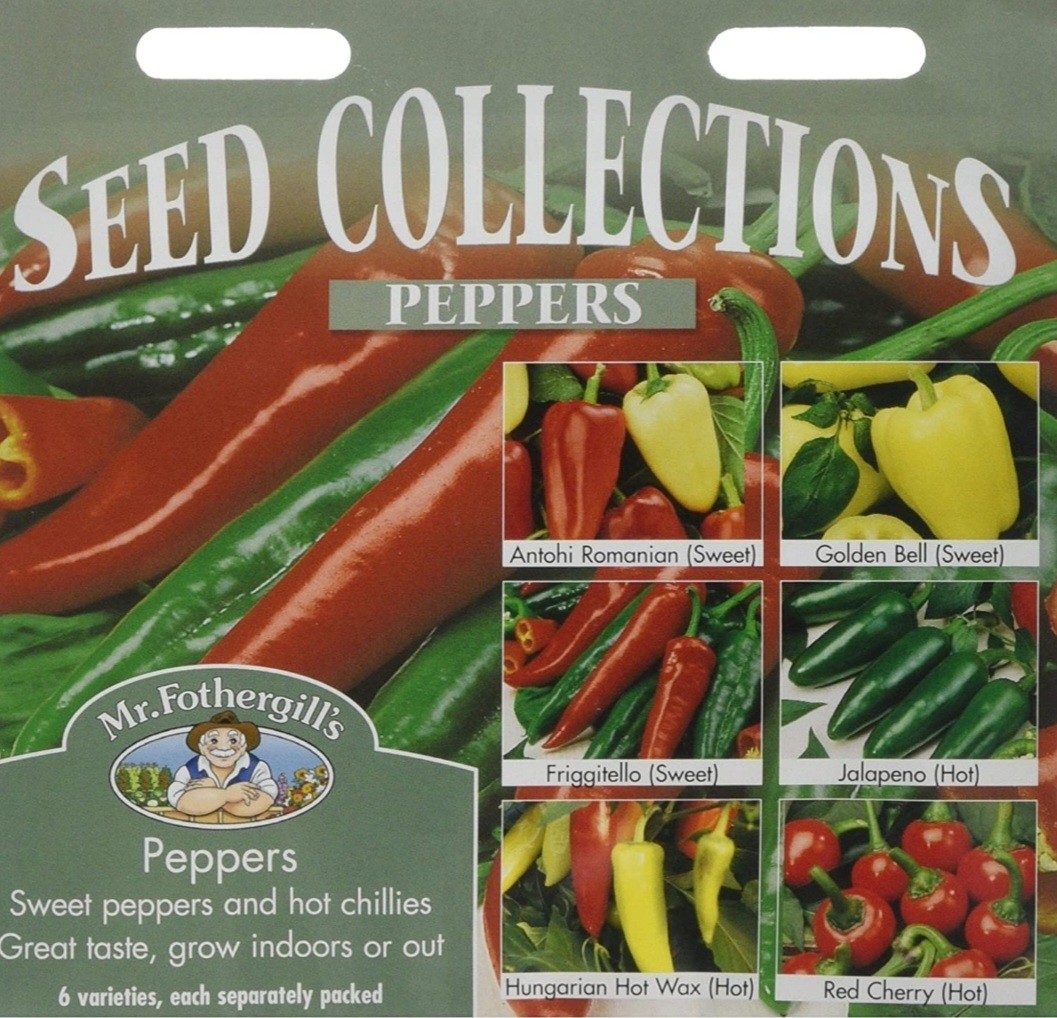
I’ve also bought the following seeds from Amazon, so I can plant up peppers (Capsicum), chilies, peas, purple basil, coriander, marjoram, dill, chamomile, cress, lemon balm and chives.

All these plants and herbs will be invaluable to me as a Green (and Kitchen) Witch and I can’t wait to tend to and care for them when they start growing!

Lucky Clover

With it being the 17th March in a few days, and therefore St. Patrick’s Day, I thought I’d write a little about clover, as it’s synonymous with St. Patrick’s Day and the luck of the Irish.

I know people usually refer to them as shamrocks, but they’re the same thing. A clover must have three leaves to be considered a shamrock. If the clover has more or less, then it is not a shamrock. Hence, all shamrocks are clovers, but not all clovers are shamrocks!!

There are a wide variety of different types of clover, all of which can be used in your magickal workings.

Clover has always been seen as a lucky plant, which is likely due to the religious connotations associated with the trifoliate (three) leaves, which symbolise the Holy Trinity. Due to this, they were often worn for protection and to deflect evil and spells.

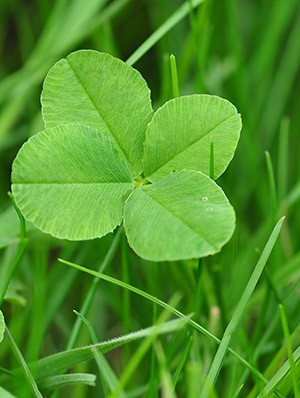
On the other hand, four leaved clovers are often associated with the cross and were believed to bring the finder fortune. In some cultures, four-leaf clovers were worn to help a man avoid military service. They have also been used to enhance physic powers and to detect the presence of spirits. Placing a four leaved clover in your shoe is also supposed to increase your chances of meeting a rich new lover.

Two and five-leaved clovers are much less common than four-leaf clovers, but are still thought to possess potent magick.

Finding a two-leaf clover means you shall soon find a lover, whilst a five-leaf clover will bring riches, especially if worn.

In general, clover is believed to repel snakes, literally and figuratively, from your property if grown there.

It also brings general protection, whether worn or placed around the home, and aids in getting over heartbreak.

Furthermore, clover is one of the flowers of the Fae and can aid in your ability to see and work with them, whether sitting and meditating, or riding the hedge with clover attached to you. Clover blossoms can also be placed on your altar to attract the Fae, should you want to…..

White and red clover have some slightly different magickal properties too. White clover helps to break hexes, whilst red clover removes negative spirits, can be used in lust potions and brings prosperity.

Medicinal Uses

Red Clover is commonly used to treat children with skin problems, especially eczema and psoriasis. For adults, it is commonly used as an expectorant to treat coughs and bronchitis. However, it should be noted that red clover contains a hormone-like chemical called isoflavones which have caused reproductive failure and liver disease in cheetahs and sterility in livestock when consumed in large quantities. Furthermore, red clover is a blood thinner. So do not use red clover regularly and avoid if you are pregnant or breastfeeding.

RED CLOVER POULTICE

To make a poultice, combine dried red clover flowers with hot water in muslin and place on the affected area for 10-15 minutes. Red clover can also be used externally as a salve.

Sources:
https://coven.thethriftywitch.com/pages/magickal-uses-of-herbs
https://tesswhitehurst.com/the-magical-properties-of-clover/ Neal’s Yard Complete Wellness

Natural Aphid Spray

I grow a number of herbs in little pots that stick to the inside of my kitchen windows, as I like to have fresh herbs when I need them, they look really nice and the plants always get plenty of sunlight.

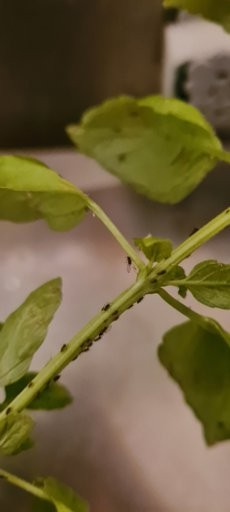
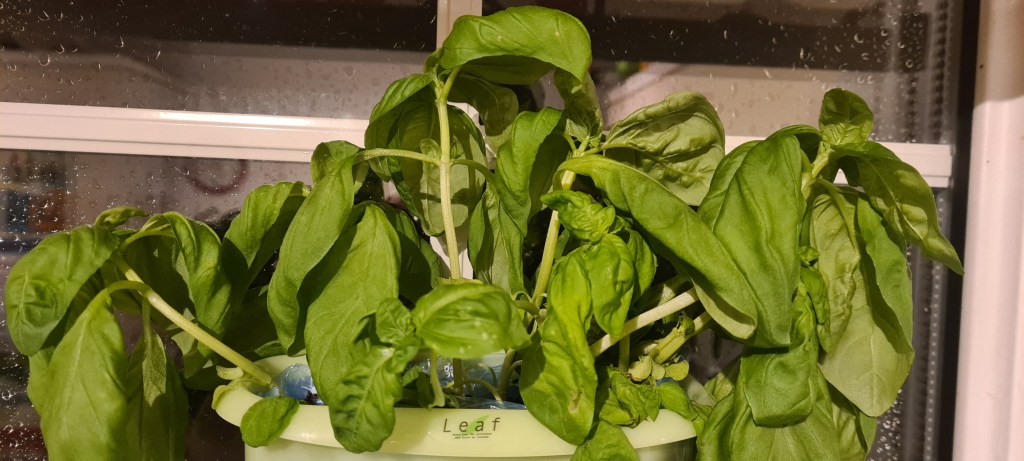
A few weeks ago I discovered (whilst talking to and tending to my herbs, as you do….), that my beloved Basil plant, which I’ve been growing for MONTHS, had dreaded aphids on him!

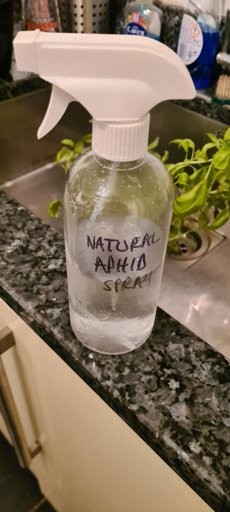
I whipped up a quick batch of natural aphid spray to gently encourage them to vacate (some may be sadly killed in the process and, for that, I am very sorry).

I used the following:

• Clean spray bottle (I reuse everything I can, so jam and pickle jars become herb containers or jar spells, old candle containers get new candles made inside them from soy wax, colourant wax and essential oils, and spray bottles, which have contained liquids that aren’t too toxic (fabulousa or febreeze spray bottles are ideal for this, but avoid anything that contained bleach or other harmful chemicals), get thoroughly washed out and reused, as more natural cleaning product bottles);

• 400ml fresh filtered water (we have hard water so everything we drink, cook with or give to the dogs gets filtered);

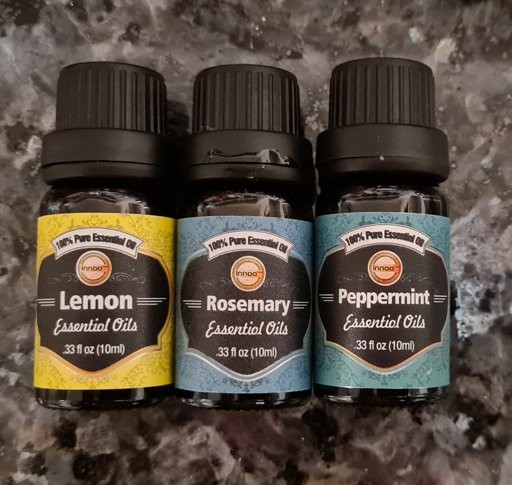
• 10-12 drops Rosemary essential oil;

• 10-12 drops Peppermint essential oil; and

• 10-12 drops Lemon essential oil.

I popped all the ingredients into the spray bottle, gave it a little shake and took my plant outside (to give them a chance to escape and bother someone else’s plants!) to spray the heck out of it!

I checked back the next day and they were all gone! I then gave my Basil a good spray with moonwater, as a little treat to help it recover from the vicious aphid onslaught and because I use this Basil in both my craft and my cooking, so I want to remove as much essential oil off the plant as I can.

Mr. Basil is doing very well now and not an interloper in sight!